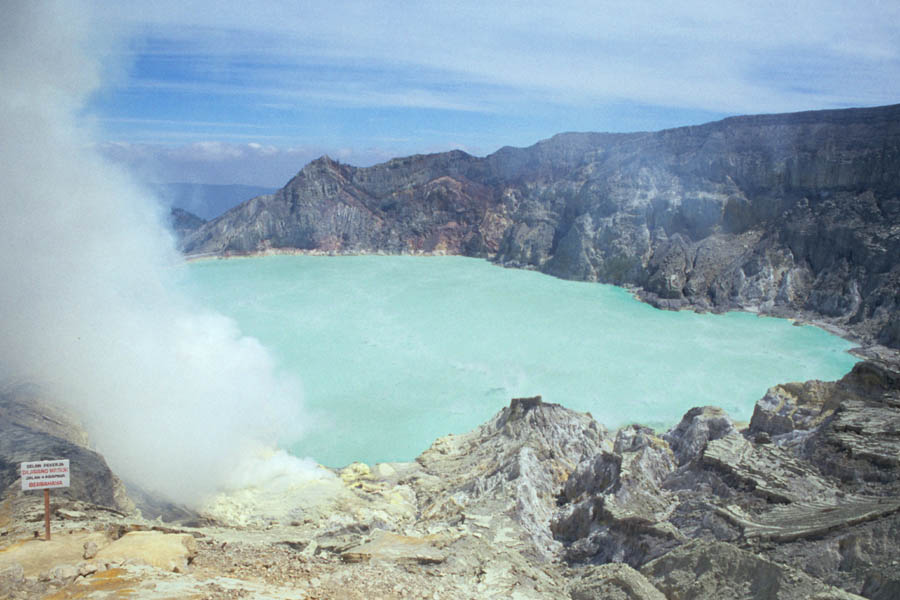
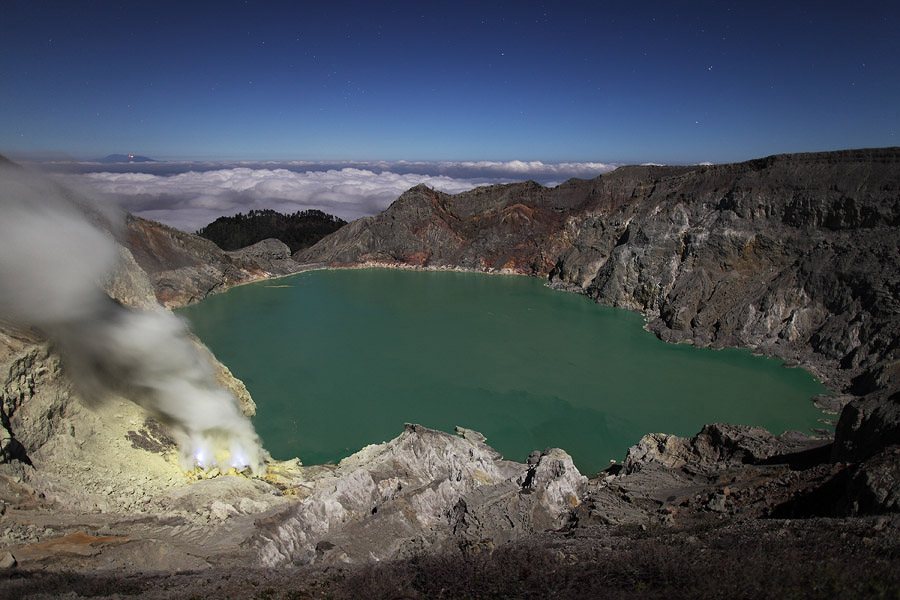
Crater of Kawah Ijen volcano containing highly acidic lake and solfatara (bottom left)
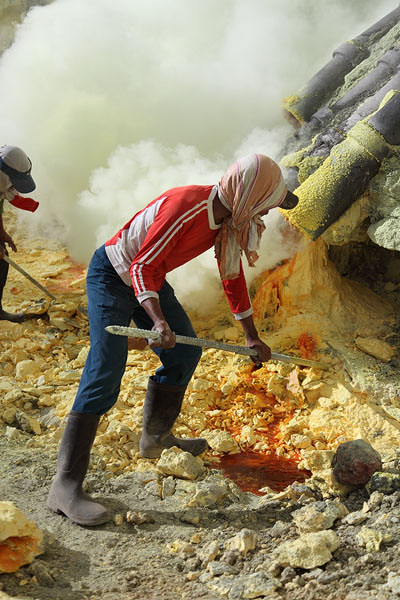
Miner breaking up sulfur for transport
Sulphur Mining at Kawah Ijen solfatara
|
|
|
|
Crater of Kawah Ijen volcano containing highly acidic lake and solfatara (bottom left) |
Miner breaking up sulfur for transport |
Sulphur Mining at Kawah Ijen solfatara |
 |
 |
 |
|
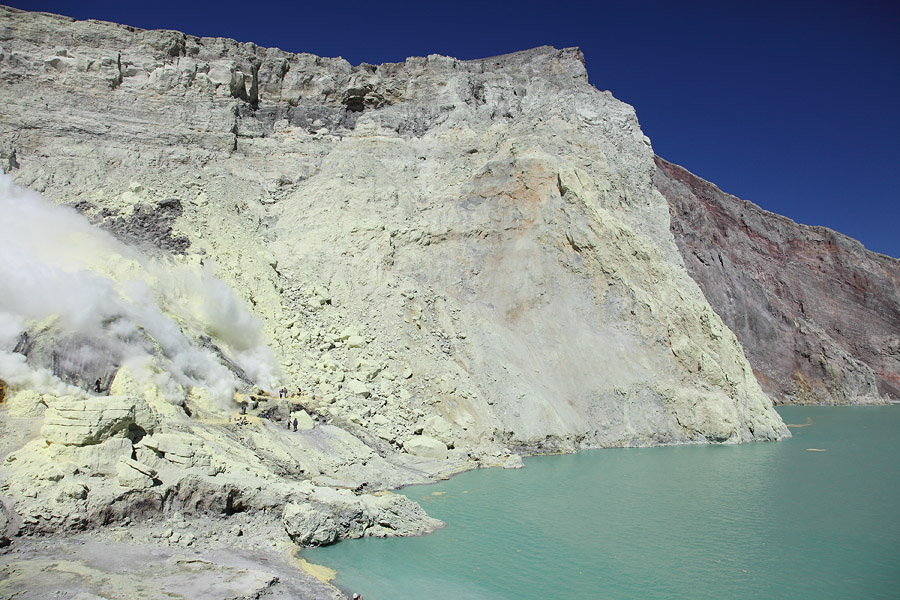
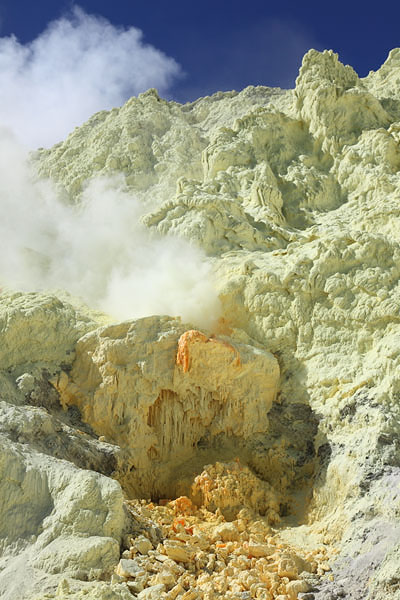
Solfatara on flank of crater above acid lake |
Natural sulfur pot damaged by miners |
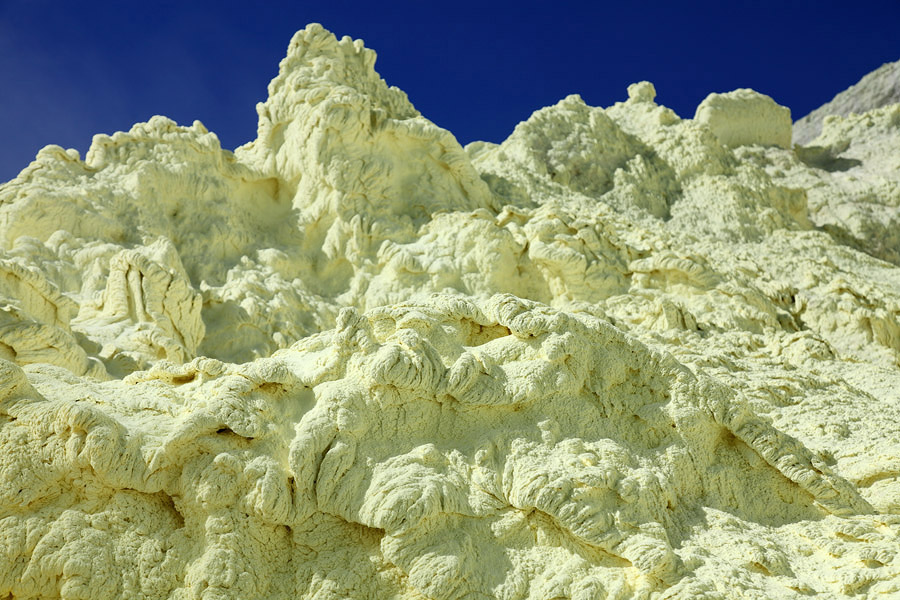
Untouched sulfur deposits |
 |
 |
 |
|
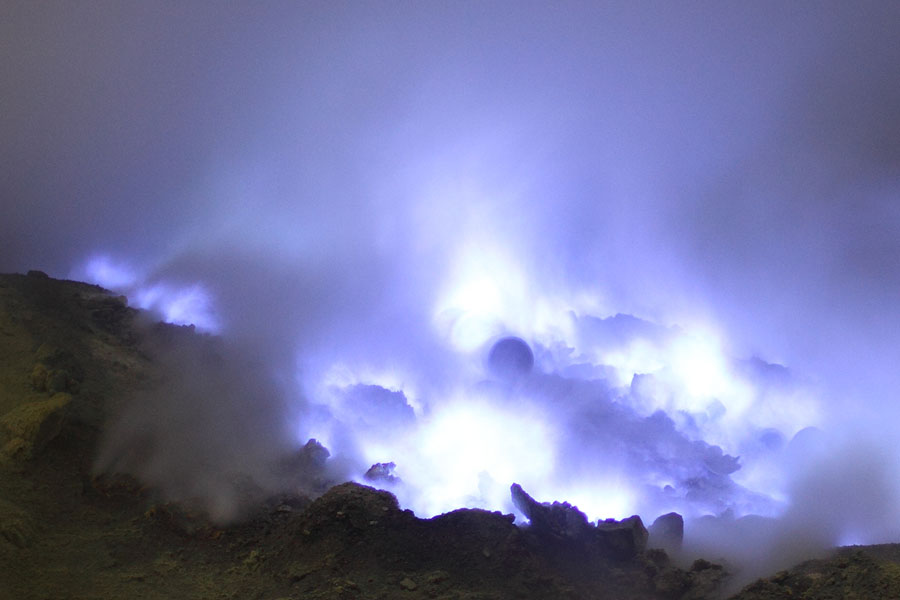
Close-up of sulfur flare |
Small burning sulfur flow during daylight |
Sulfur flare zone |
 |
 |
|
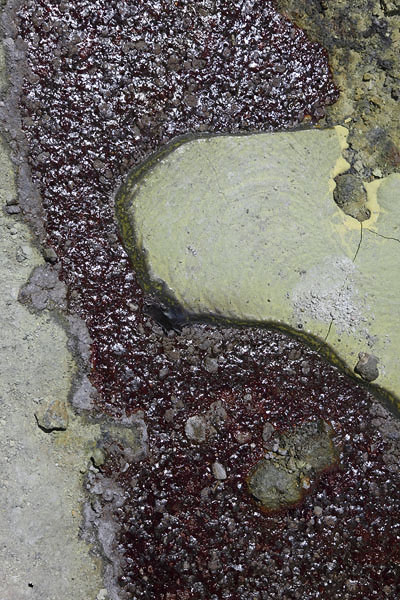
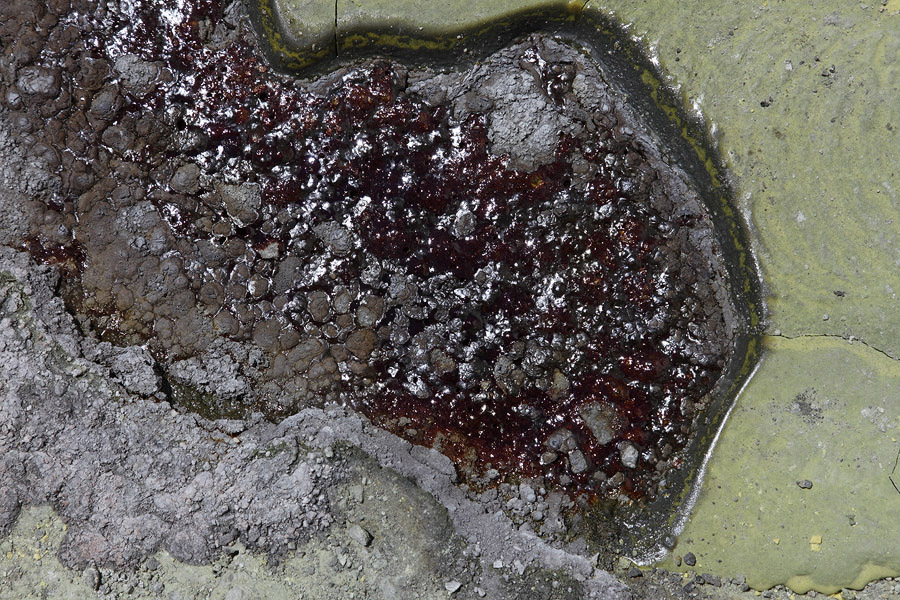
Burning sulfur oxidizes to reddish dioxide |
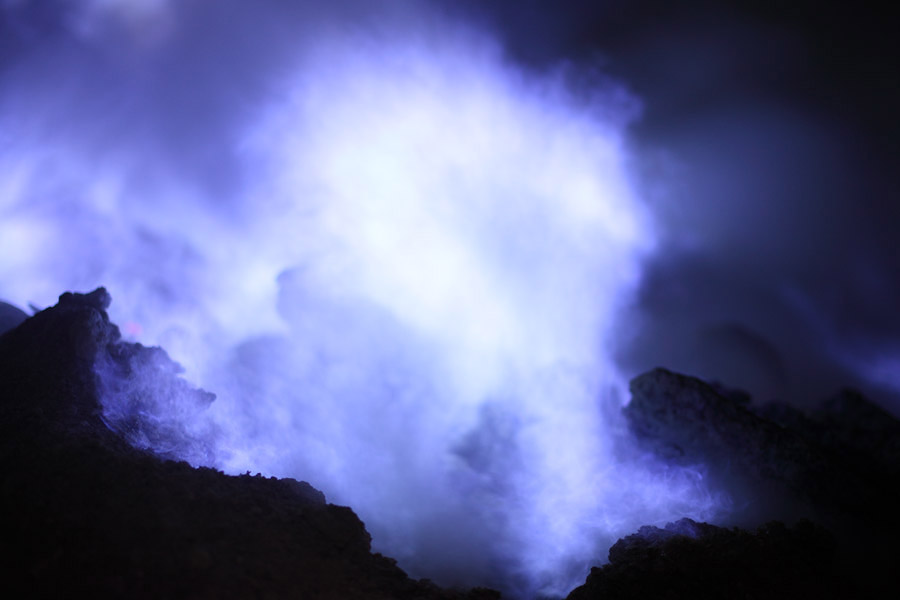
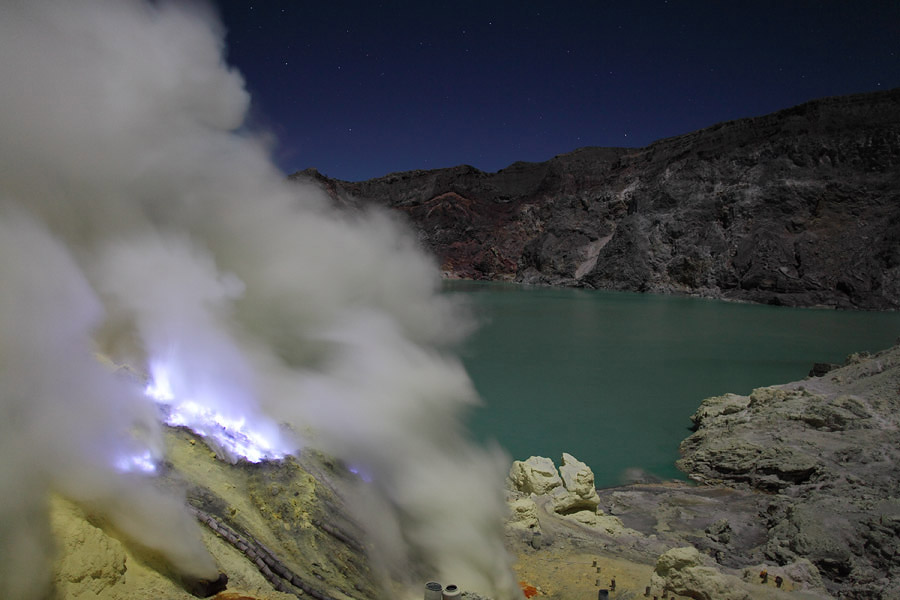
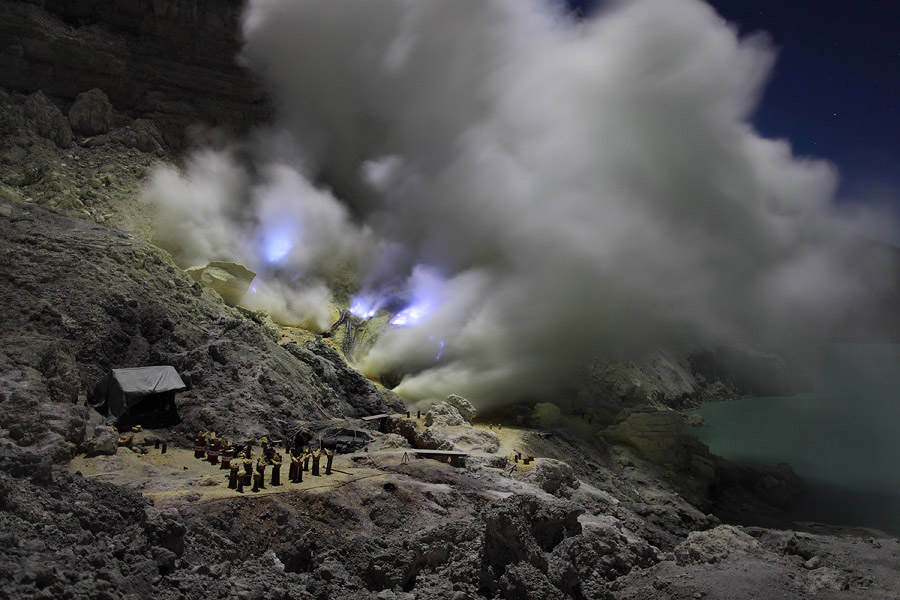
Nighttime view of crater with blue flames at base of gas column |
 |
 |
|
Areas of burning sulfur in mine |
Areas of burning sulfur in mine |
 |
 |
Pipe used to extract molten sulphur from the solfatara |
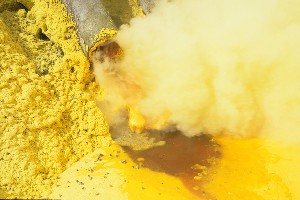
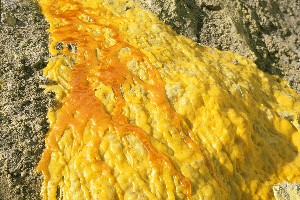
Small molten sulphur flow |
 |
 |
 |
|
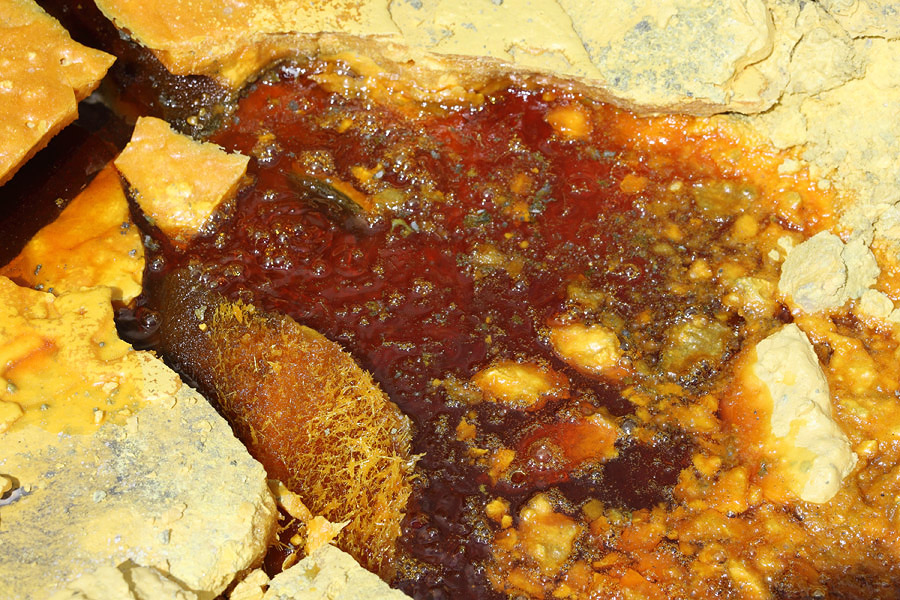
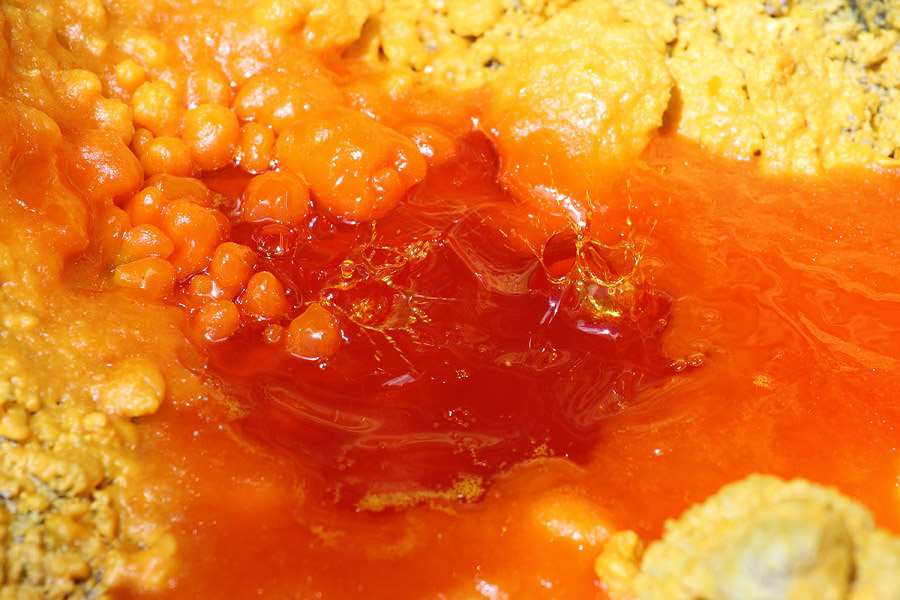
Sulfur frothing as if boiling, probably due to moisture under flow |
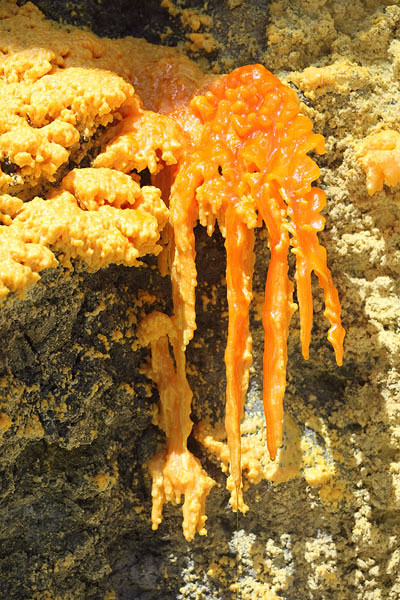
Molten sulfur forms stalagtites |
Pool of molten sulfur under stalagtities |
 |
 |
 |
|
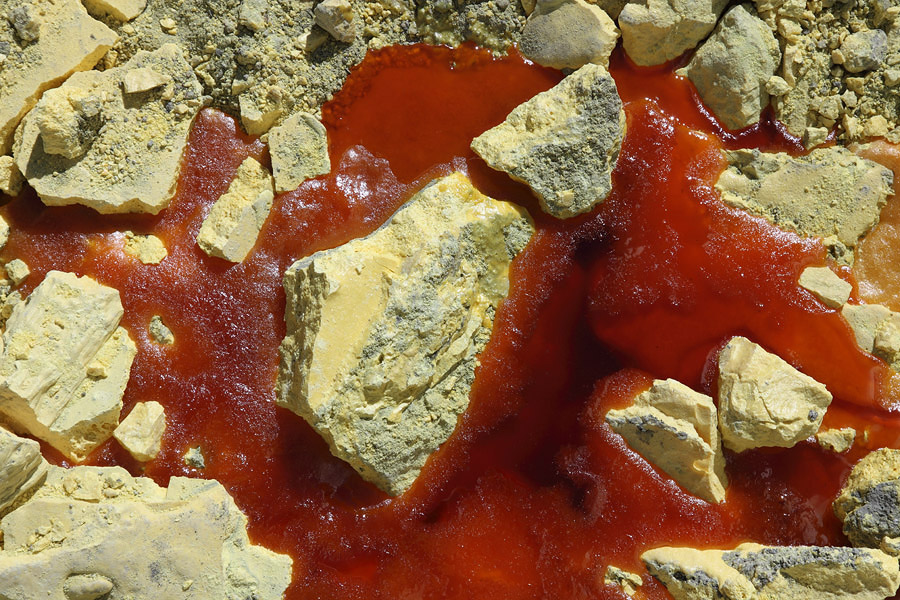
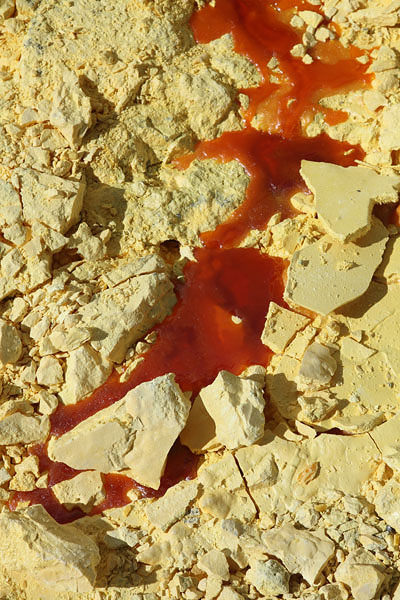
Molten sulfur flows over smashed up older deposits |
Molten sulfur flows over smashed up older deposits |
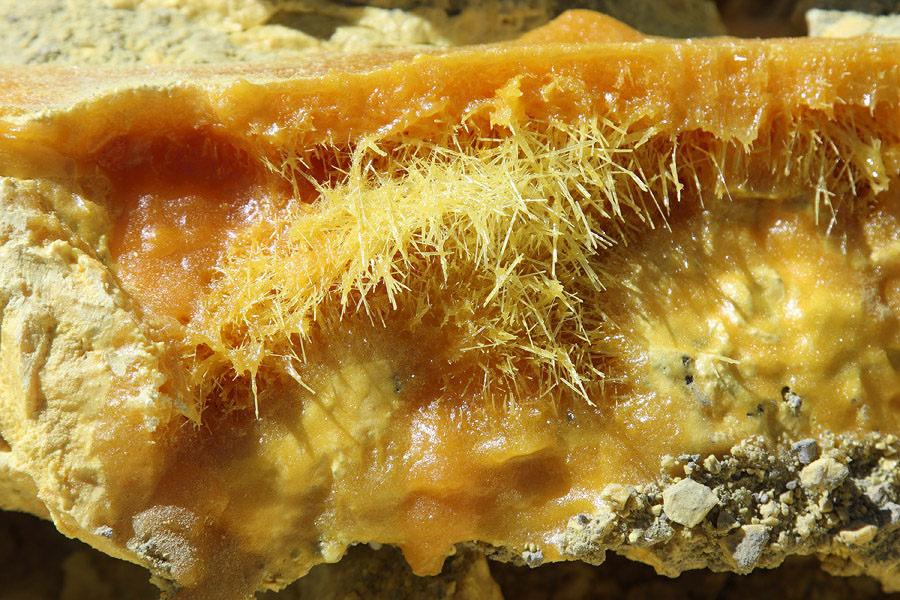
Cooling sulfur gases form crystalline deposits in places |
 |
 |
 |
|
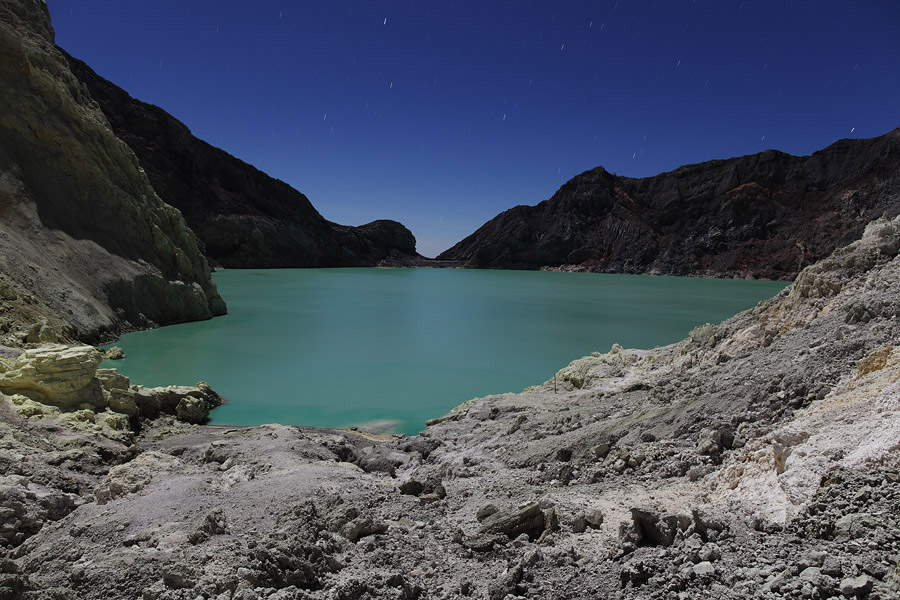
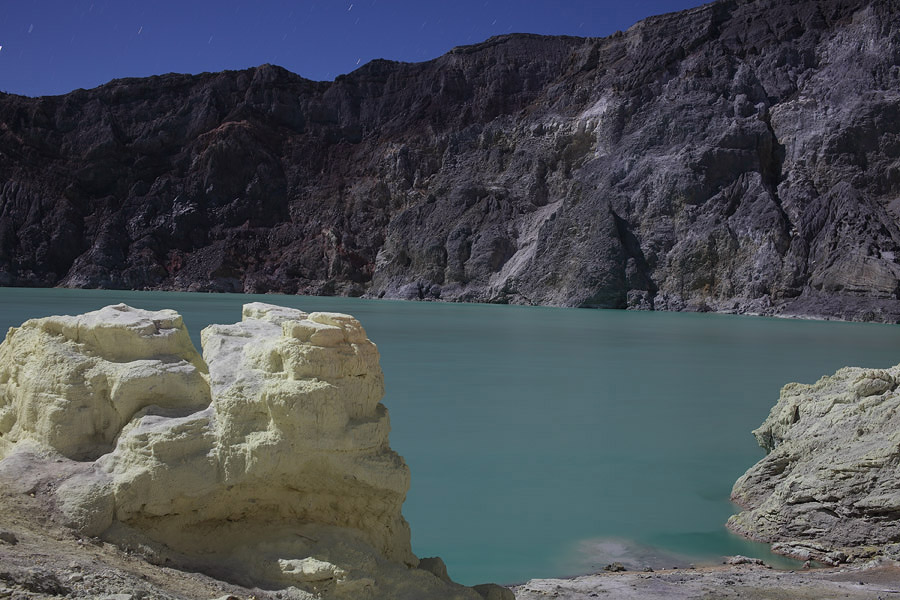
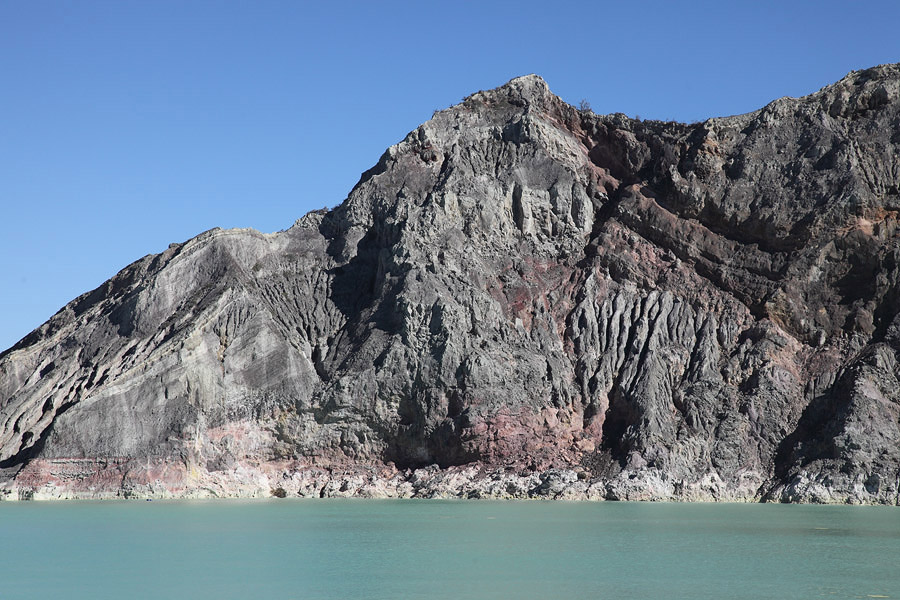
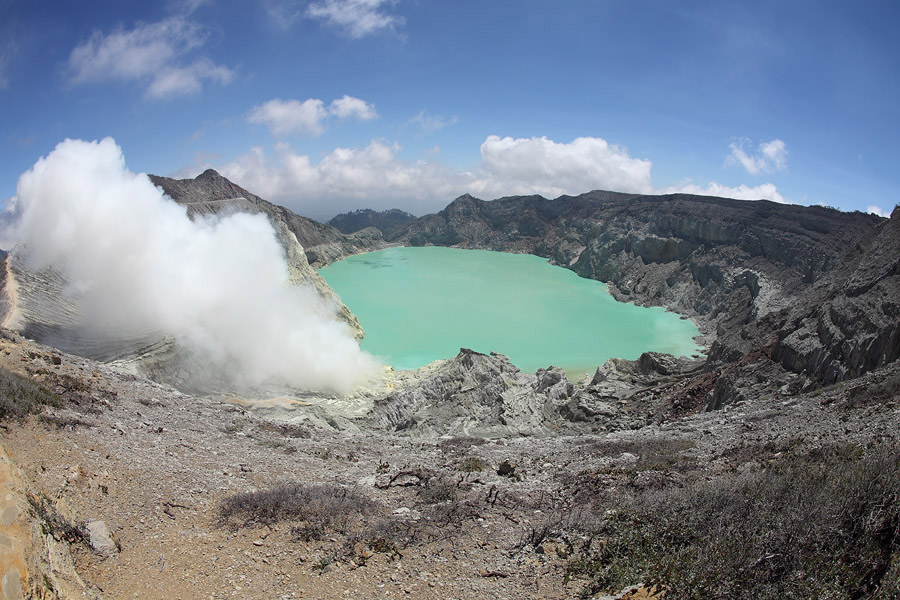
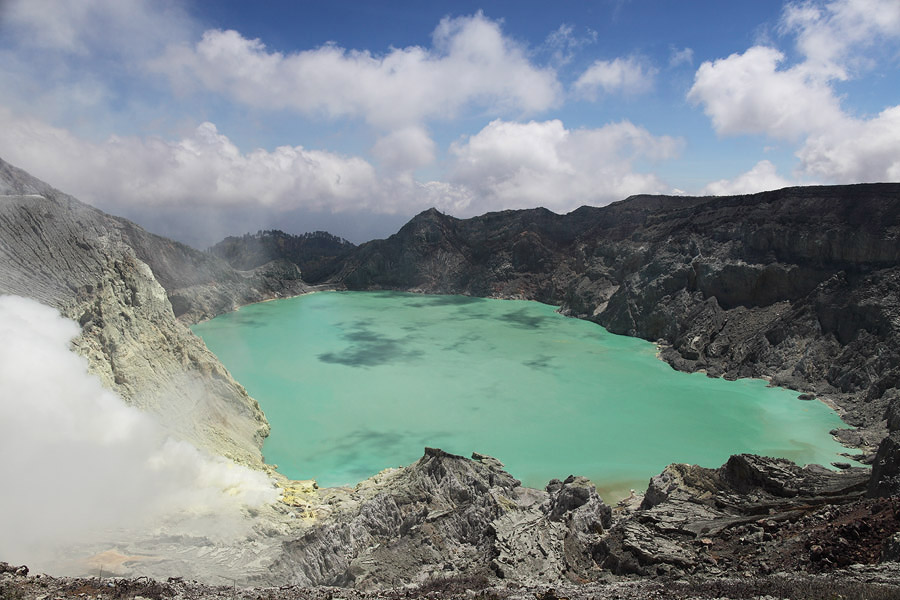
Kawah Ijen Acidic Crater Lake |
 |
 |
|
Kawah Ijen Crater |
Kawah Ijen Crater |
 |
 |
|
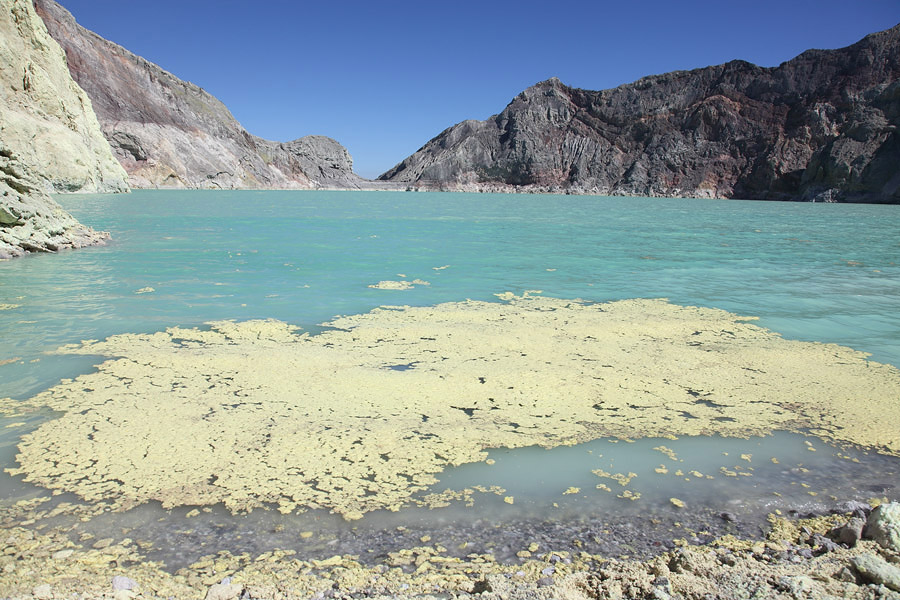
Rafts of yellowish material floating on lake |
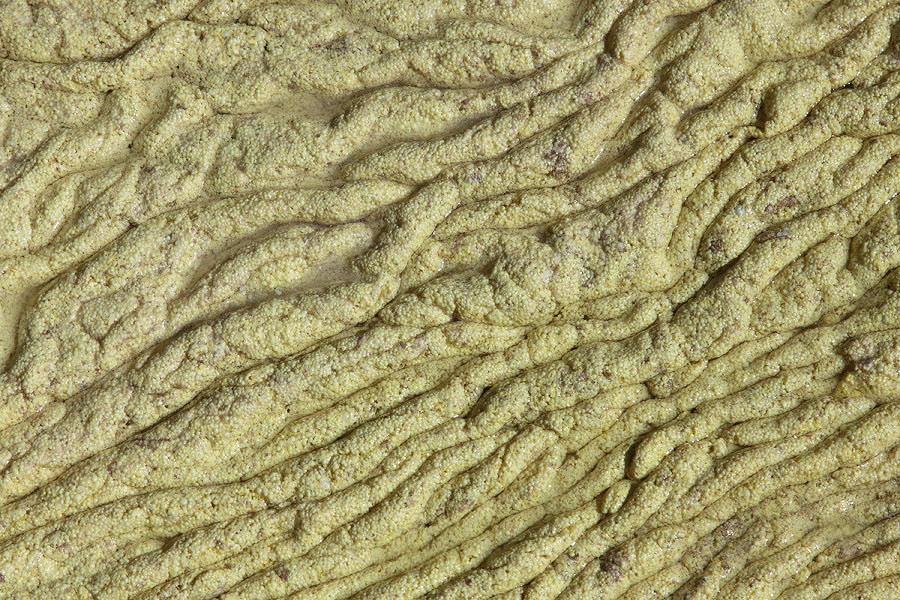
Close-up of yellow "scum" floating on lake |
 |
 |
|
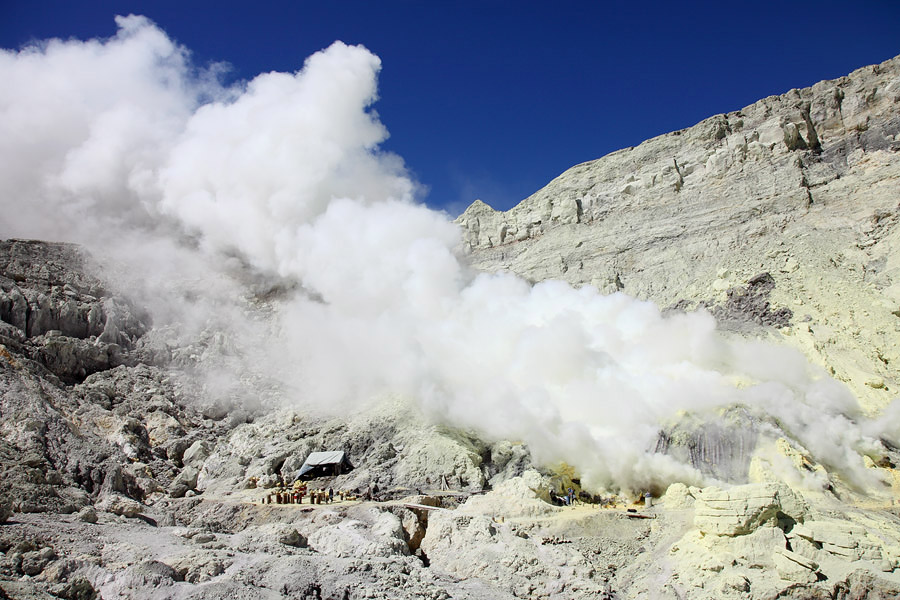
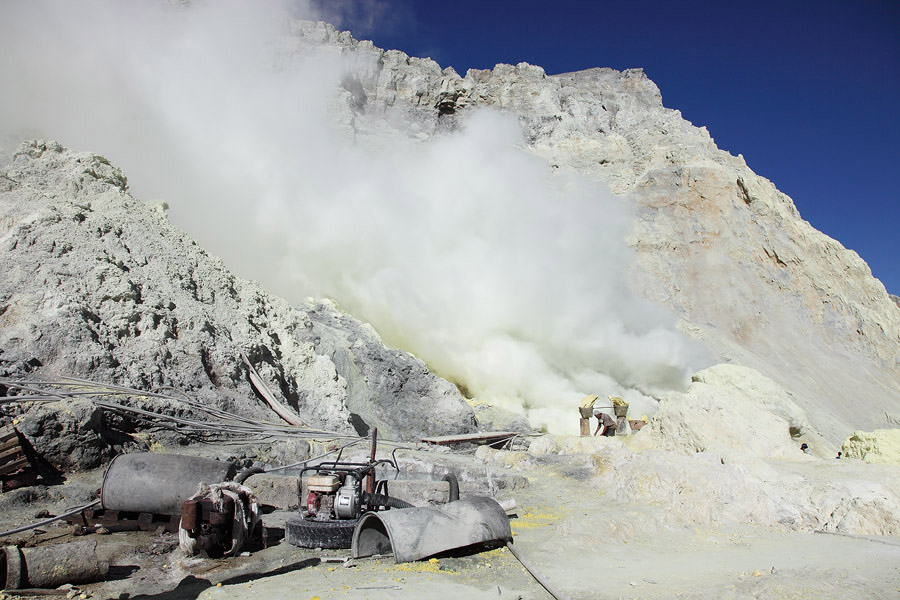
Solfatara with sulfur mine |
Solfatara with sulfur mine |
 |
 |
|
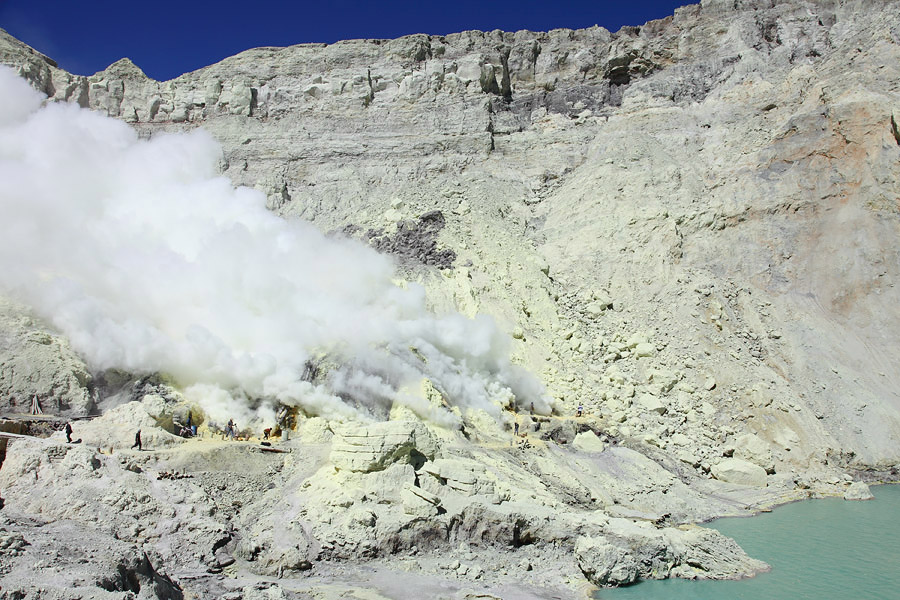
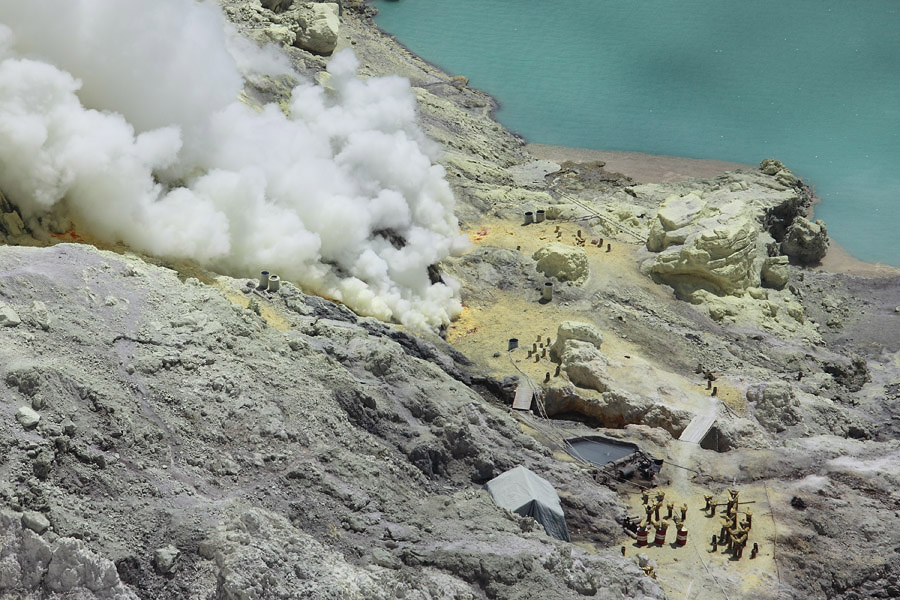
Solfatara with sulfur mine |
Solfatara with sulfur mine viewed from crater rim |
 |
 |
 |
|
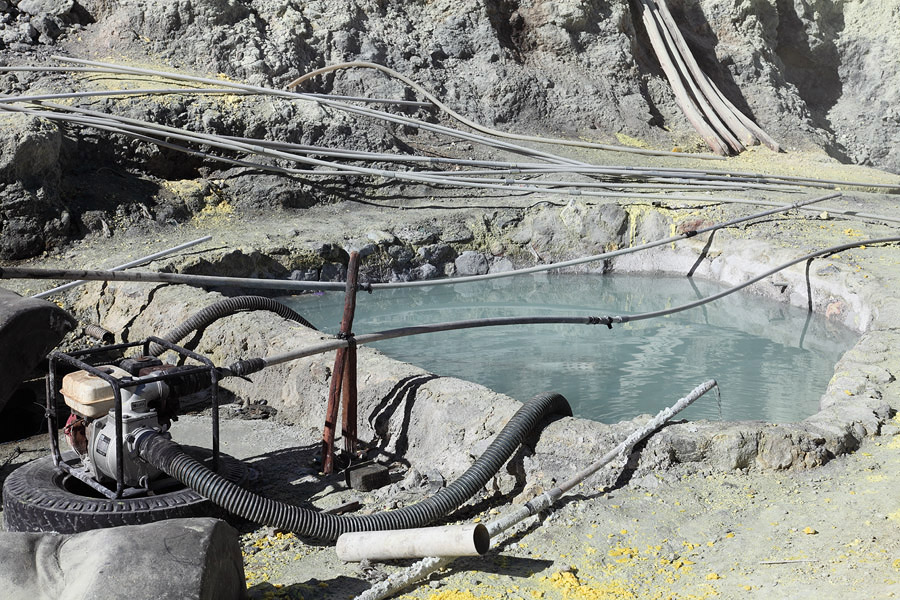
Pool for collecting spring waters for extinguishing or cooling sulfur |
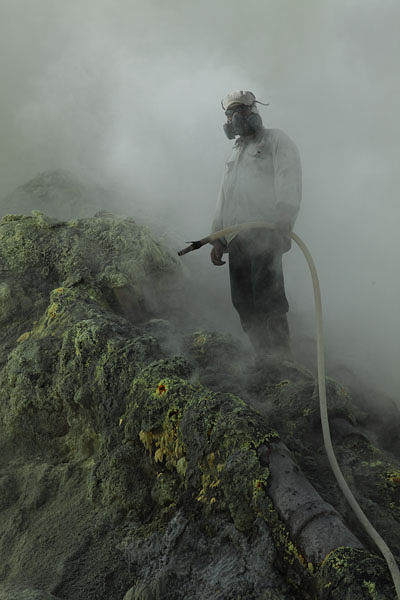
Worker waits for water to cool piping |
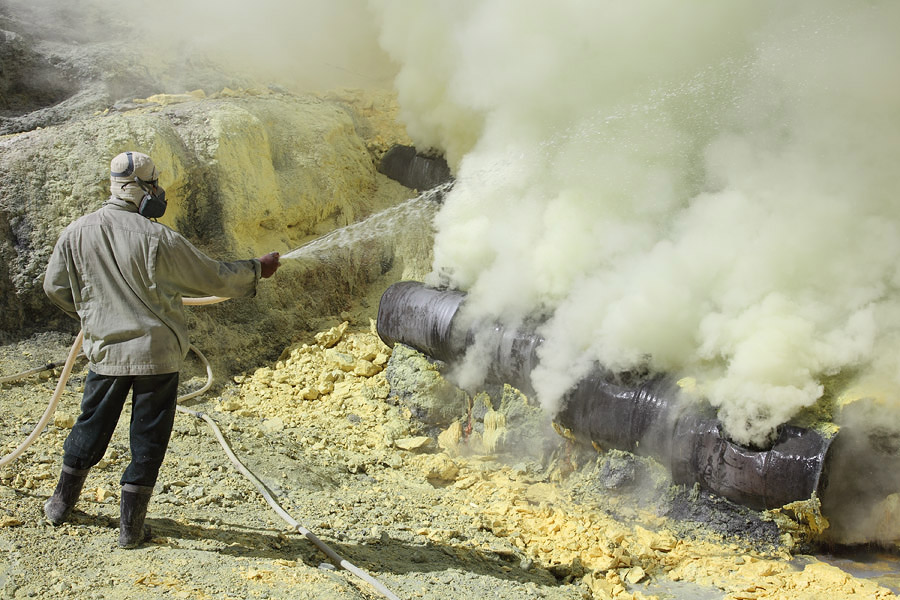
Worker spraying water onto solfatara |
 |
 |
 |
|
Miners working in intense gases with merely handkerkiefs for protection. |
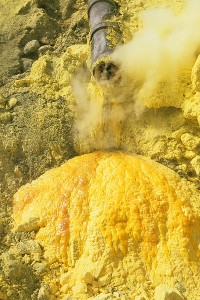
Fresh sulfur deposit below pipe |
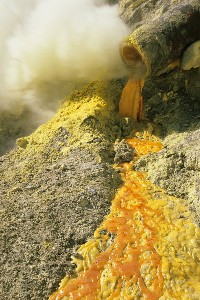
Small sulphur flow emanating from pipe in sulphur mine. |
 |
 |
|
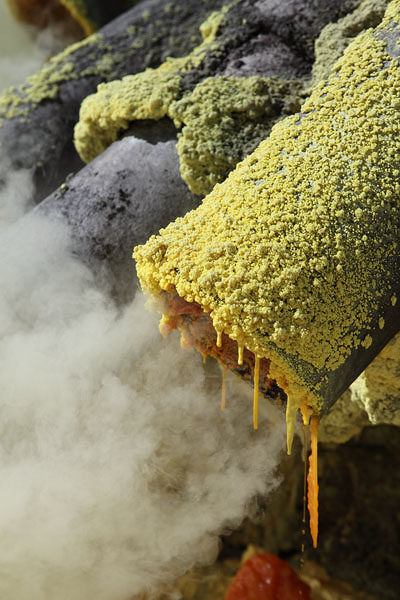
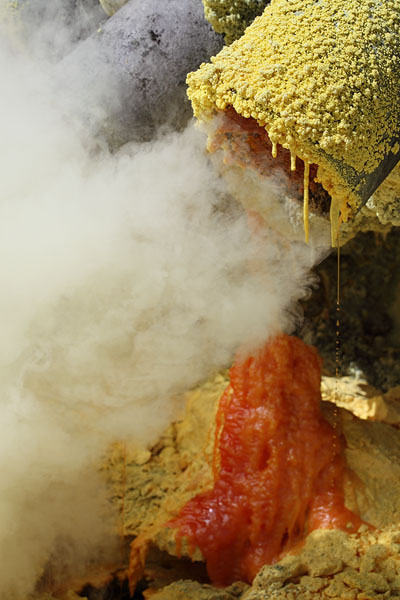
Condensating sulfur dribbling from pipe |
Condensating sulfur dribbling from pipe |
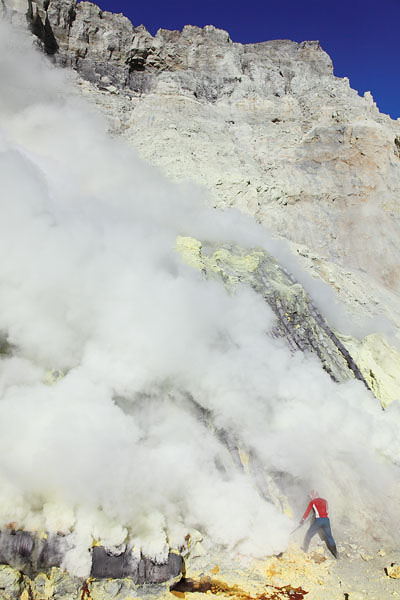 |
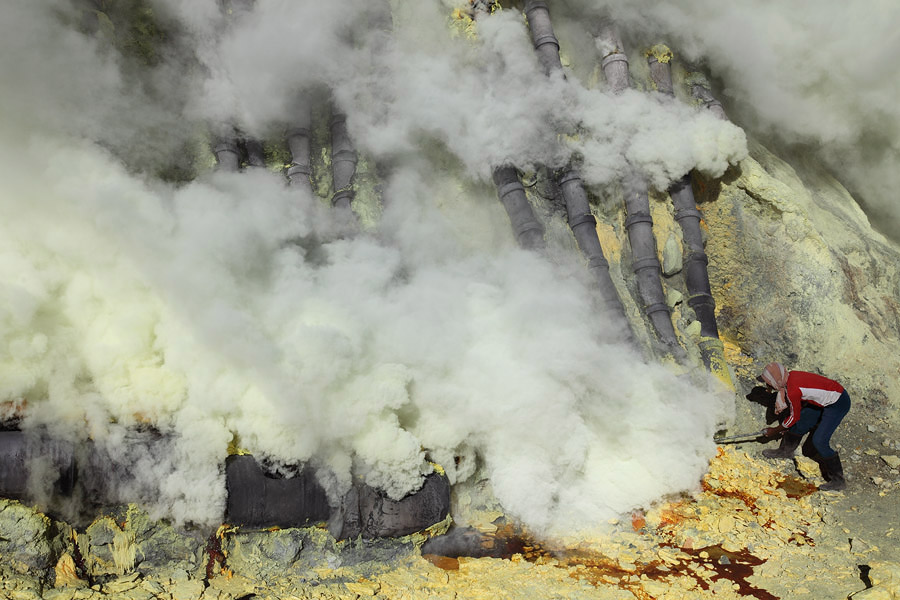 |
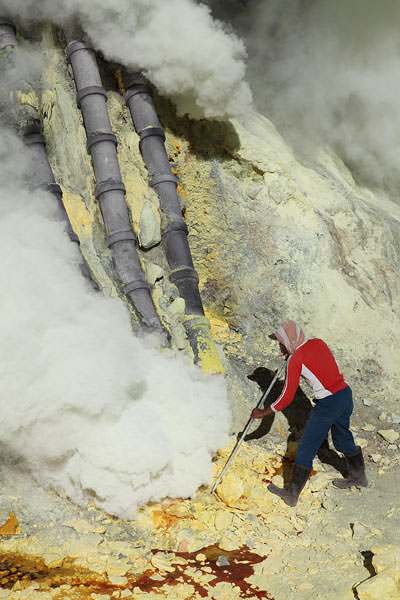 |
|
Worker breaking up sulfur accumulations at end of pipes |
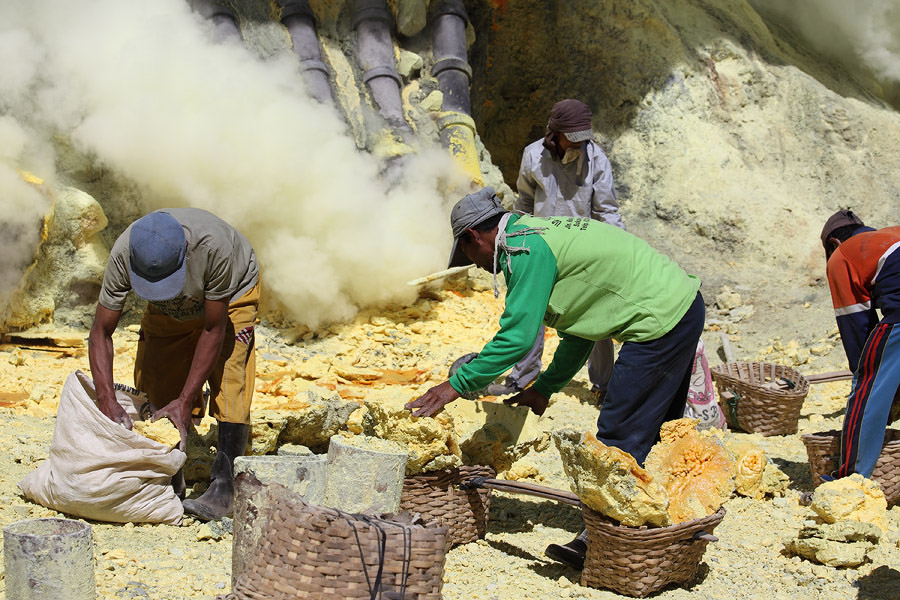 |
 |
 |
|
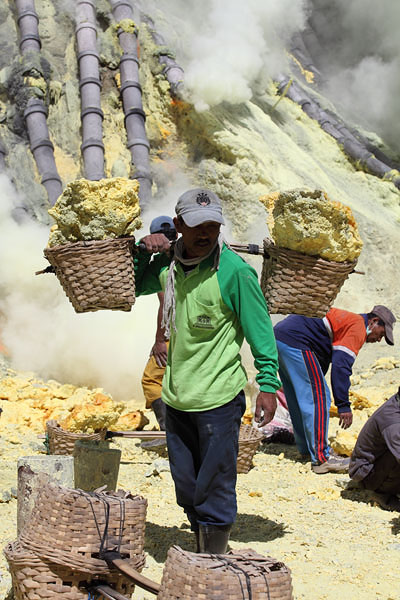
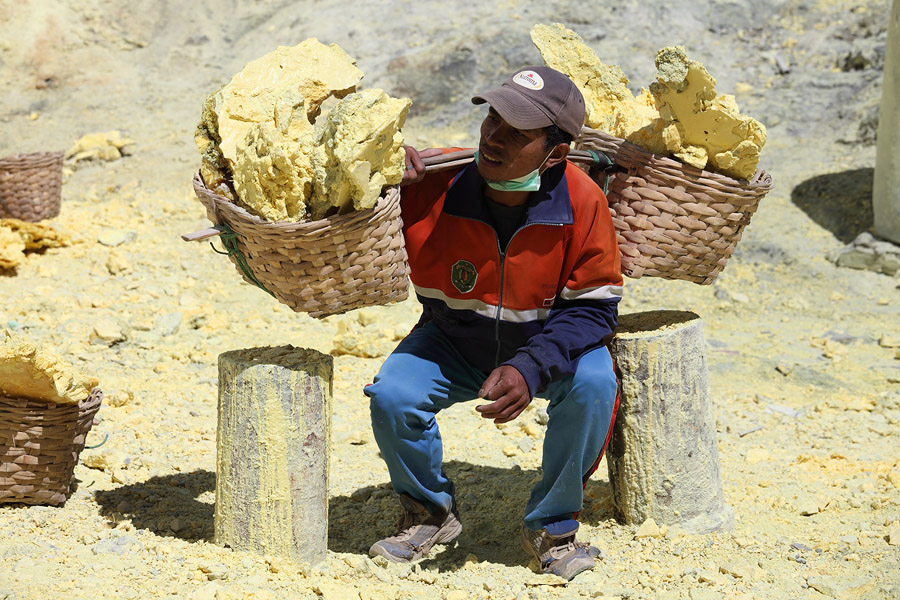
Collecting sulfur for transport |
Classic means of transporting sulfur at Ijen |
Lifting heavy baskets full of sulfur |
 |
 |
|
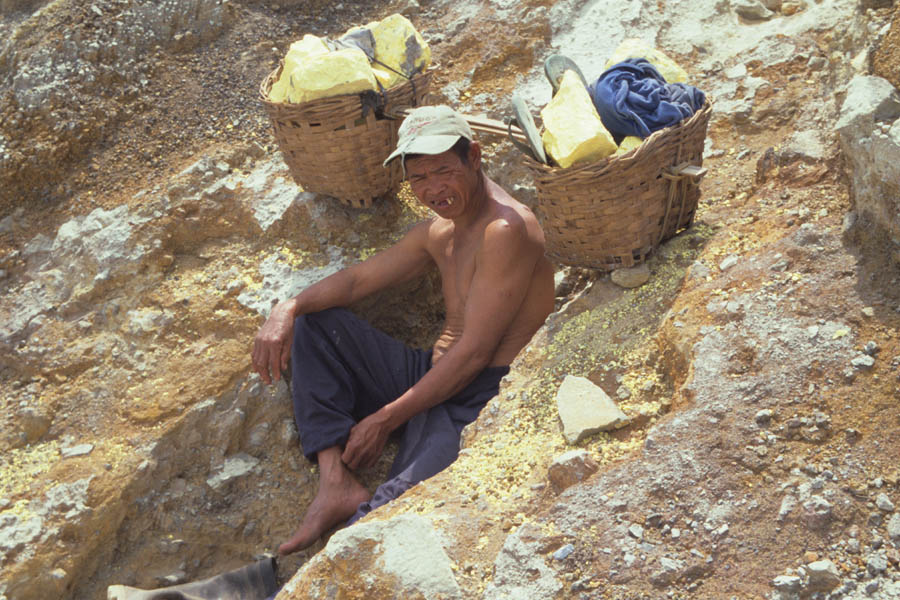
Miner resting along climb from crater |
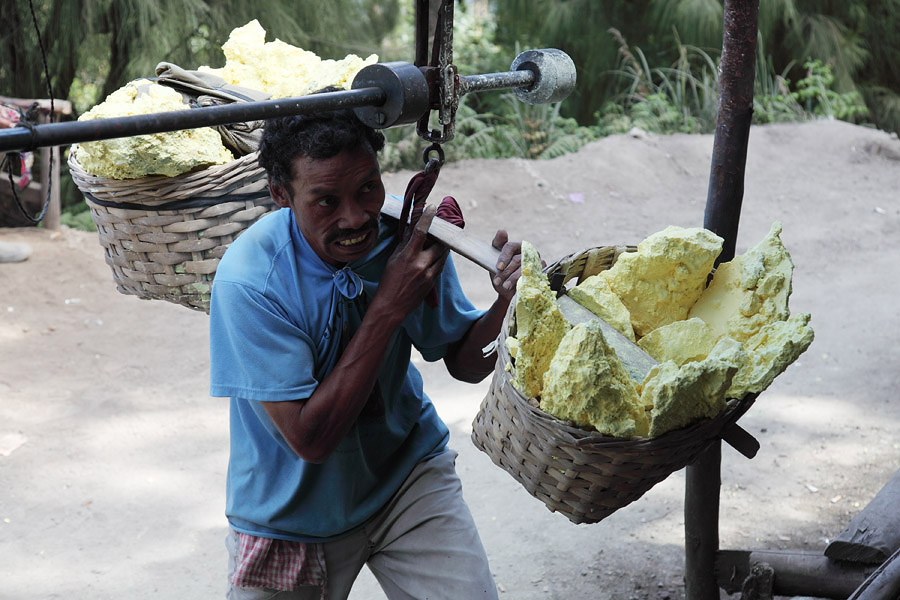
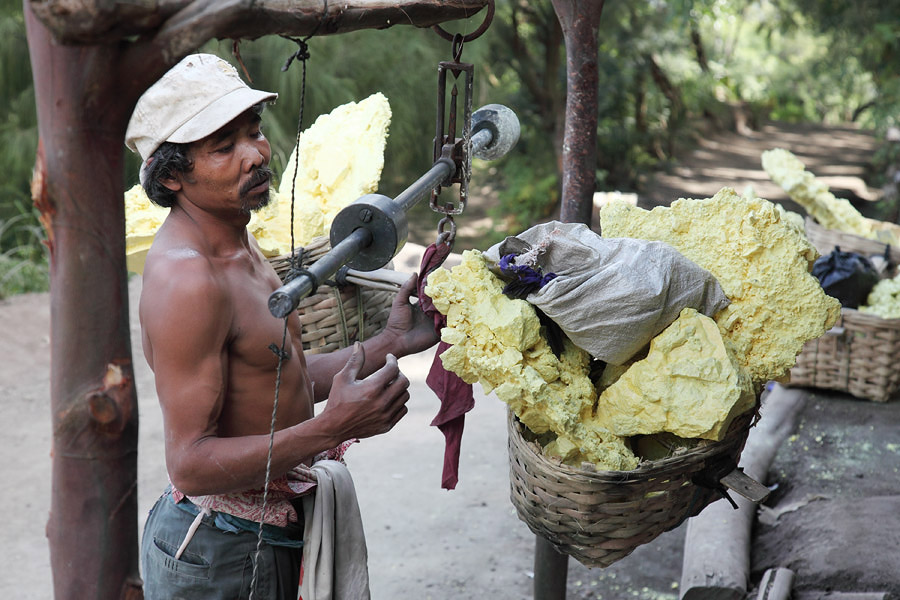
Worker attaching sulfur load to weighing station |
 |
 |
 |
|
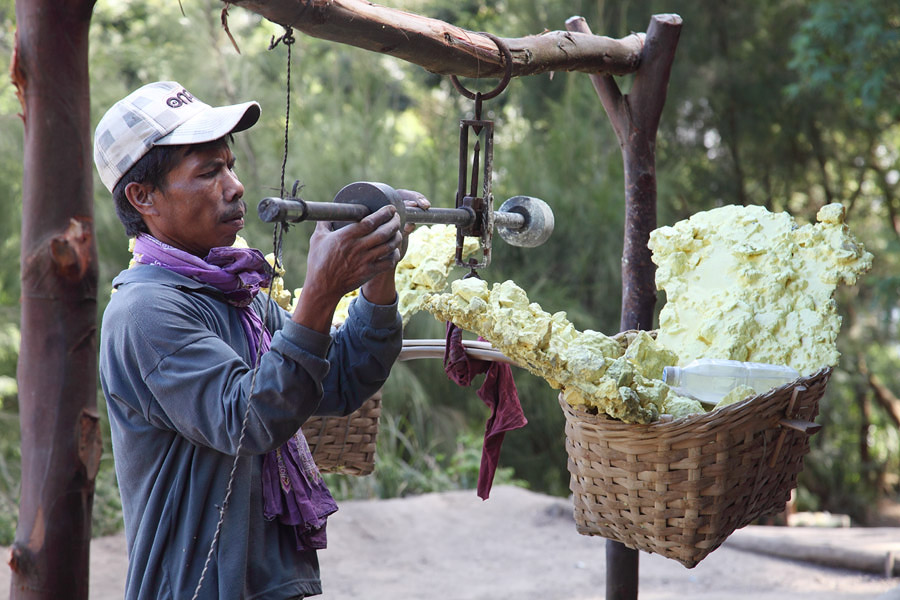
Weighing sulfur |
Adjusting weights on scales |
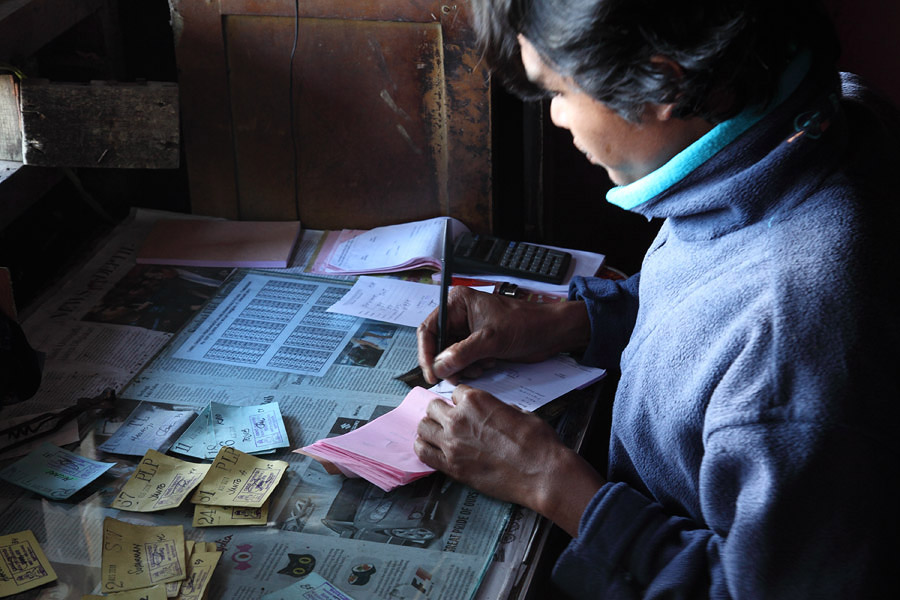
Receipt is provided from hut opposite scales |