 Pinguino de Adelia Pinguino de Adelia |
 Manchot Adelie Manchot Adelie |
 Adeliepinguin Adeliepinguin |
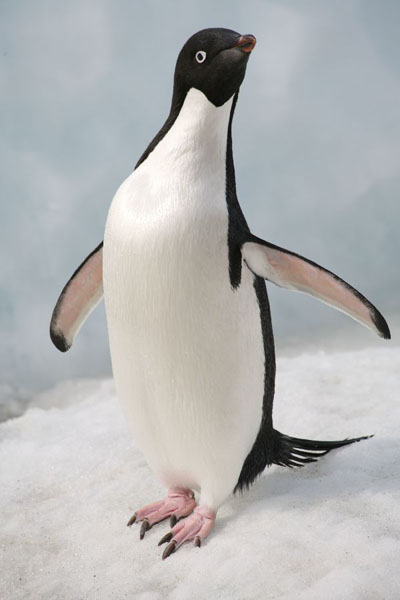
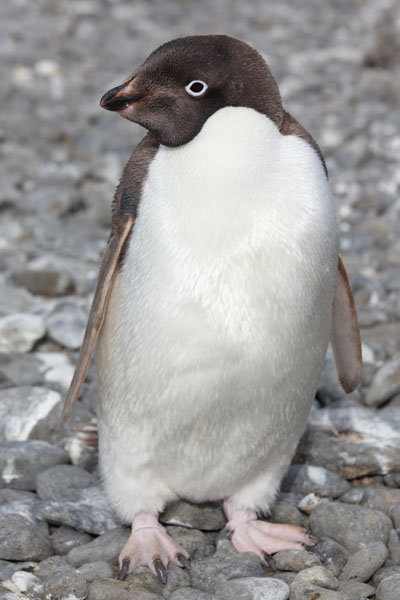
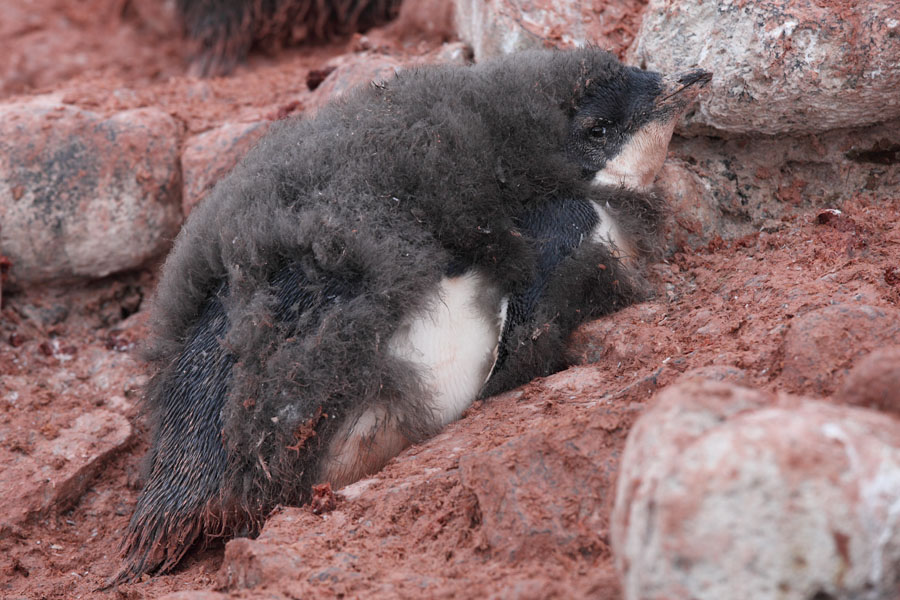
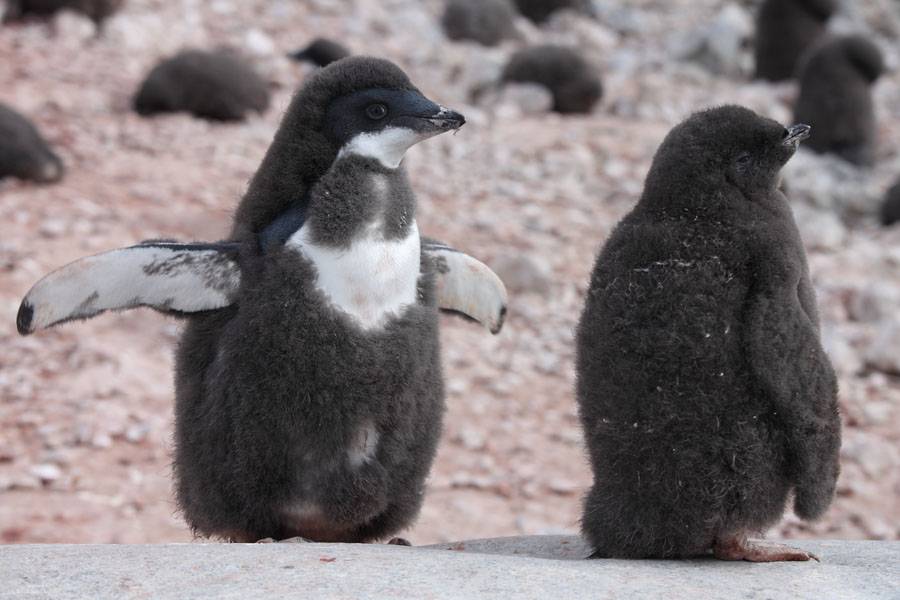
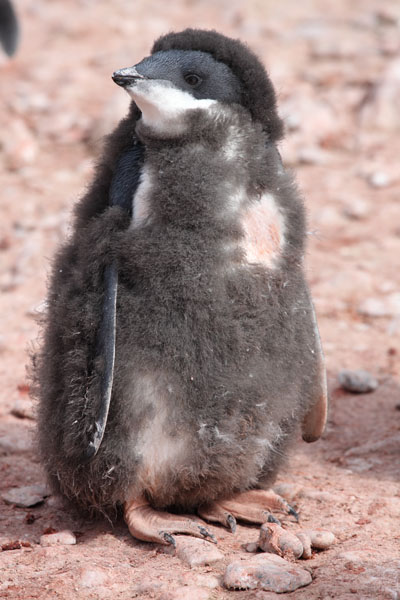
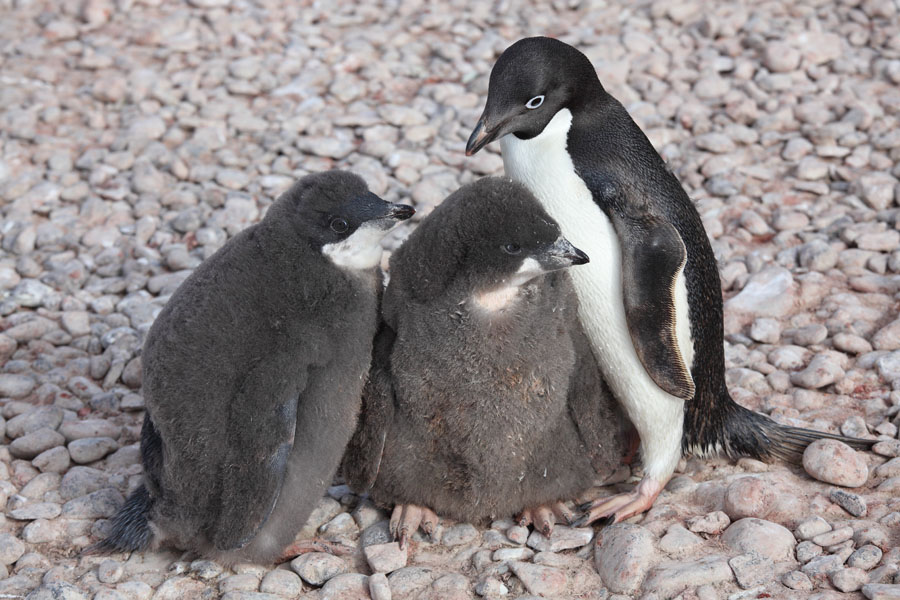
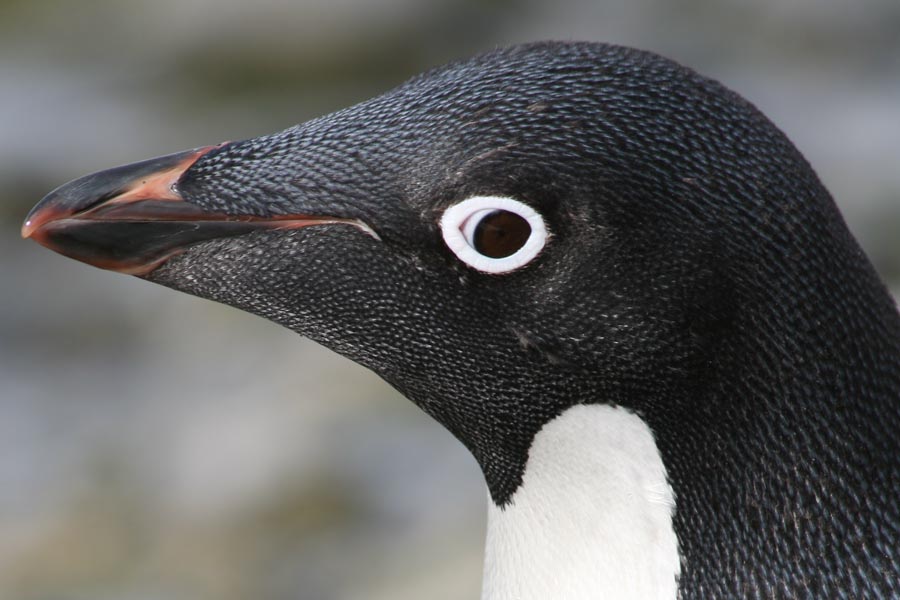
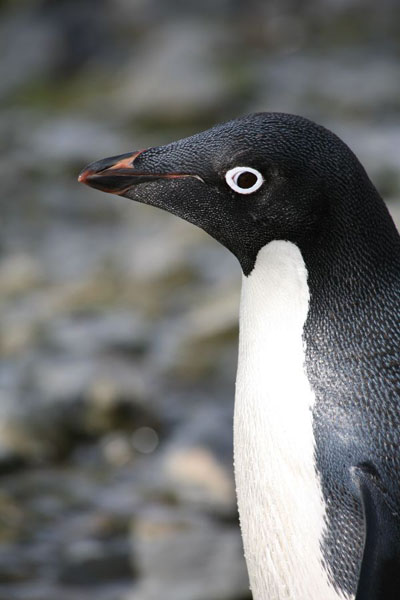
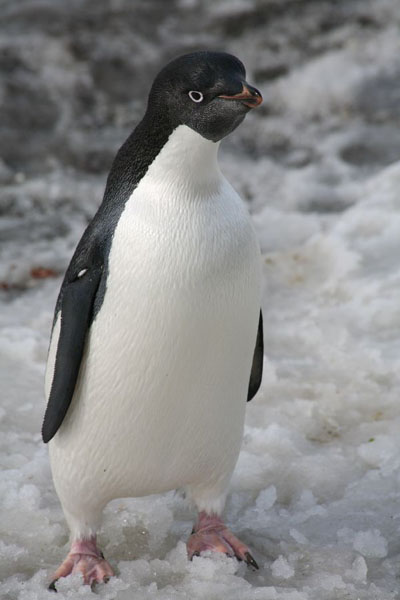
Adelie Penguin |
|
Specific Name: Pygoscelis adeliae | ||
|
|||
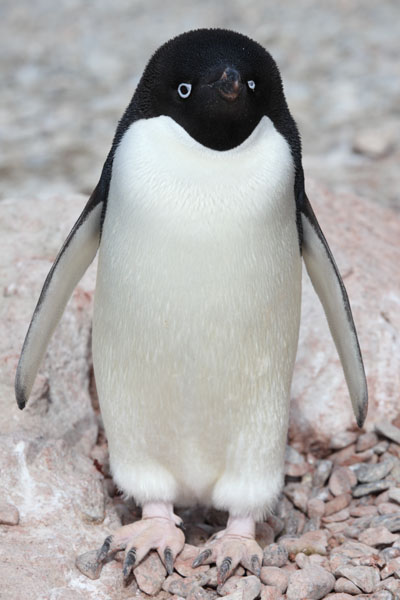
| Adult Height: 70cm | |||
| Adult Weight: 4kg | |||
| Adult Flipper Length: 16-18cm | |||
| Estimated Population: 5 Million |
General Notes / Distribution: |
||||||||
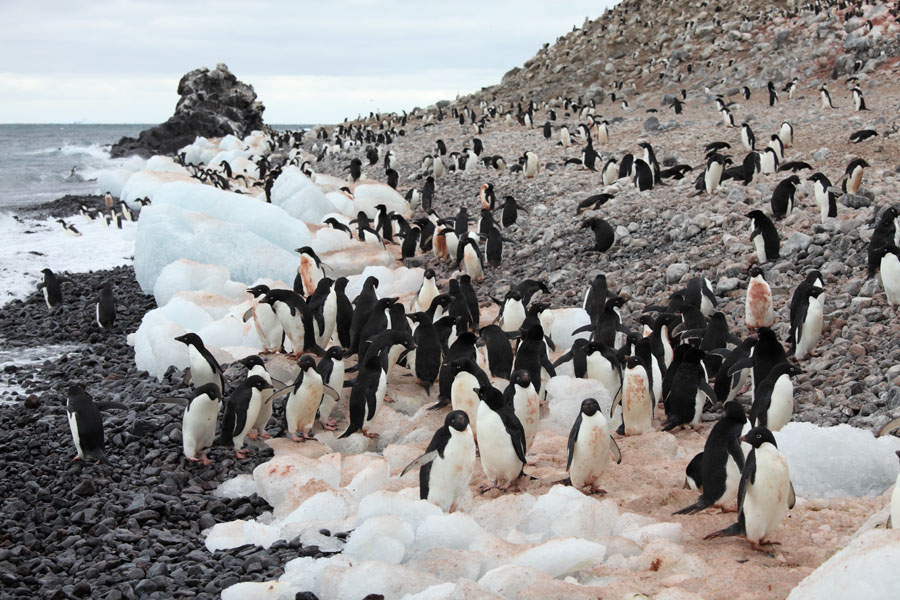
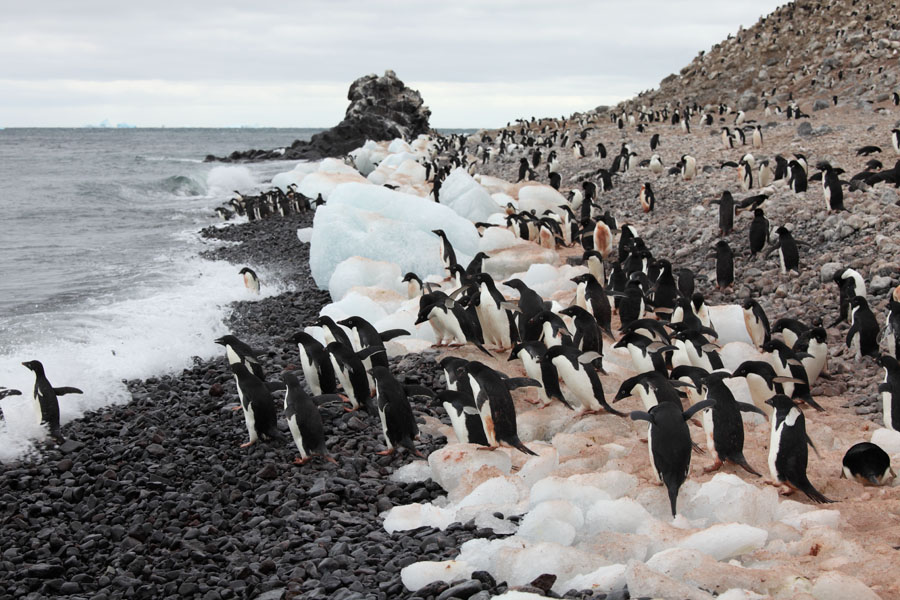
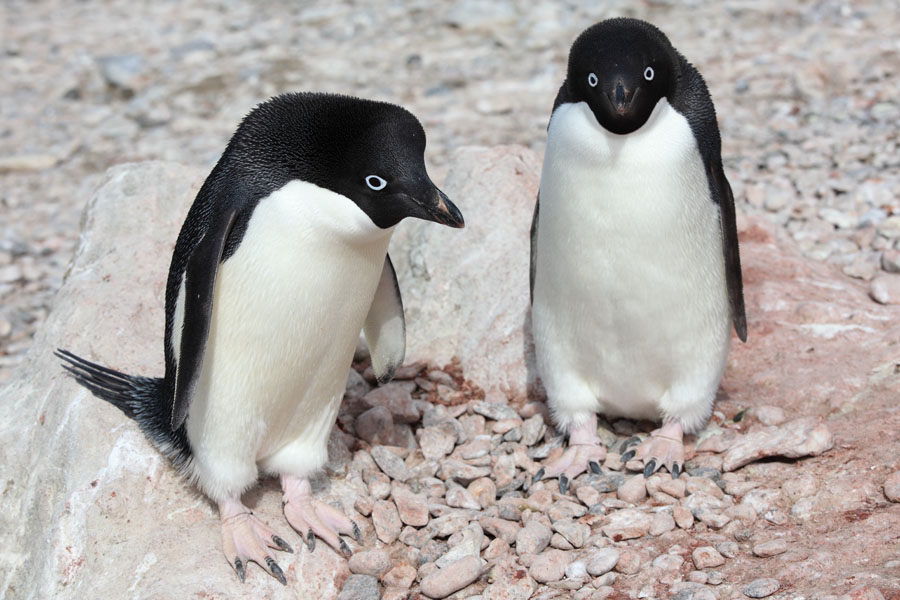
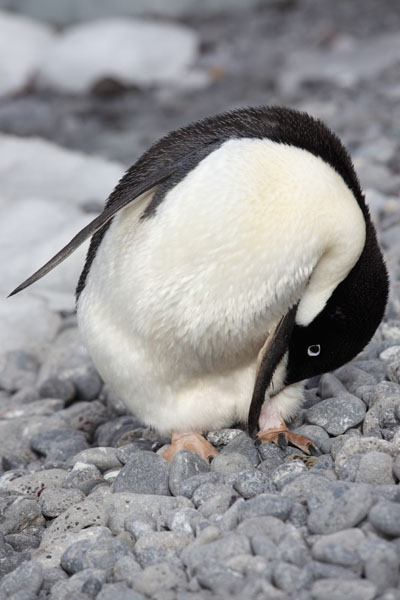
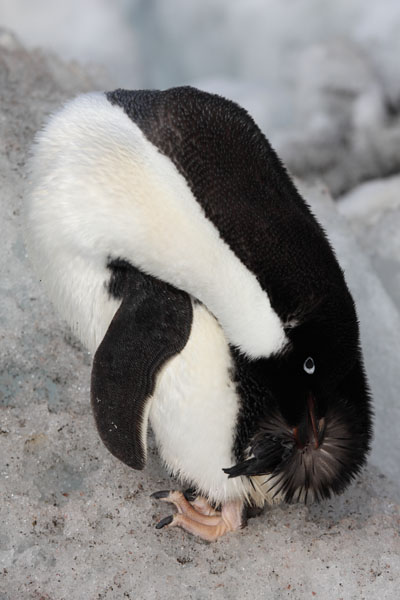
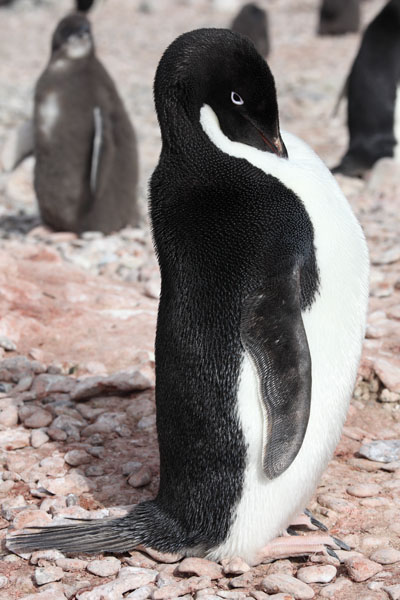
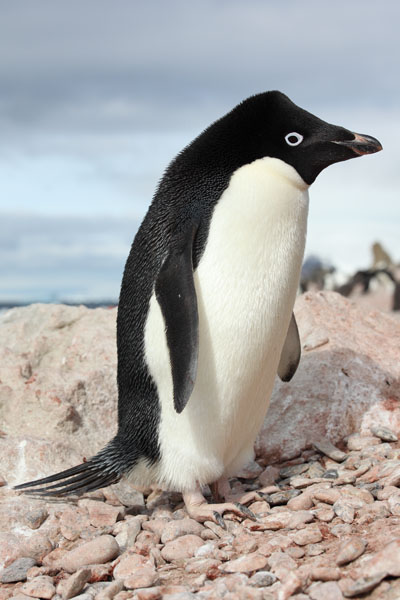
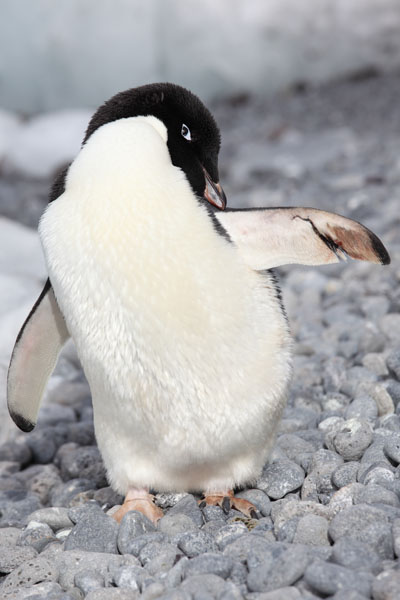
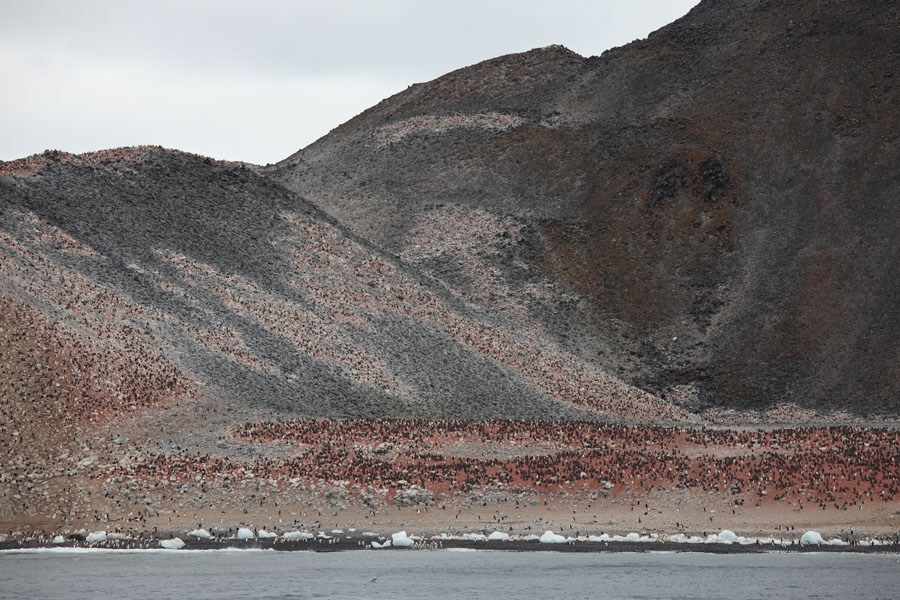
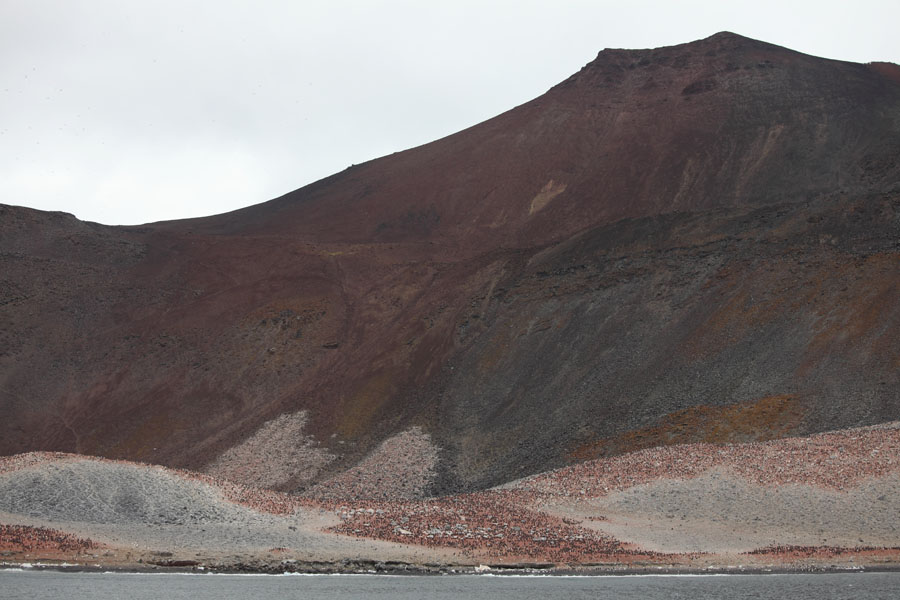
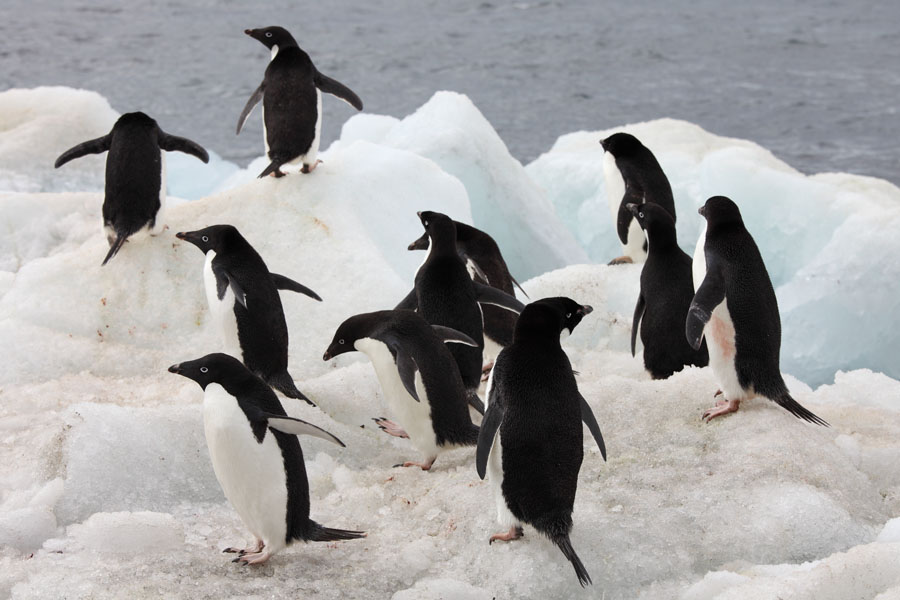
Adelie penguin colonies are found on ice-free coastal areas of the Antarctic continent and several nearby islands (e.g. S. Shetland, S. Orkney, S. Sandwich, Balleny and Peter Islands). Individual birds may be occasionally sighted on subantarctic islands. Adelies belong to the Pygoscelid family of penguins along with the closely related Chinstrap Penguin and the Gentoo.
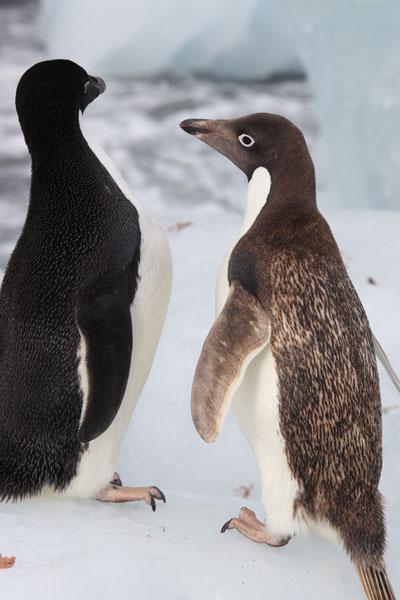
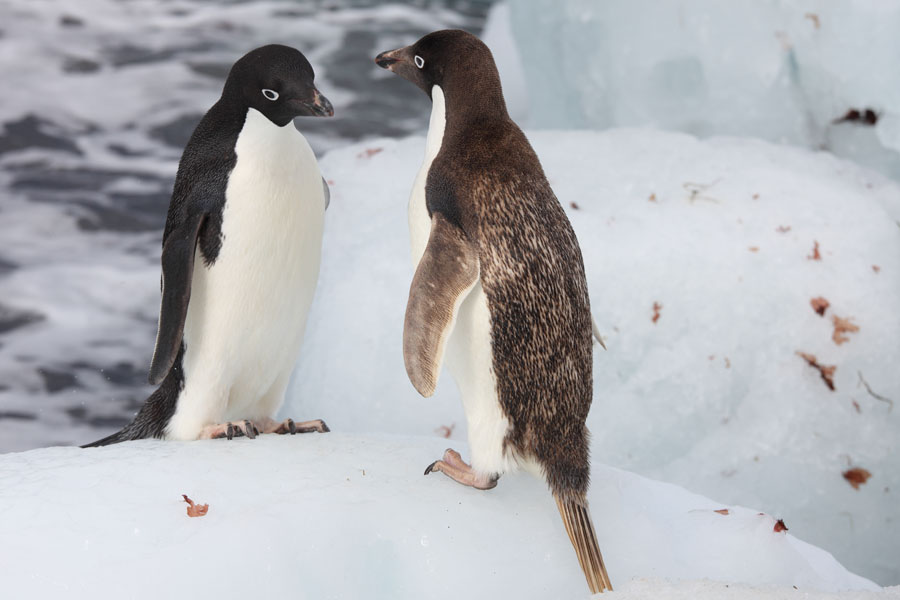
Unusual Leucistic VariantOccasionally, unusual colour morphs of Adelie Penguins can be observed. The morph shown below is a leucistic variant which has a pigmentation deficiency in its plumage. It was observed at Brown Bluff in January 2009.
|
Feeding: |
||||||||
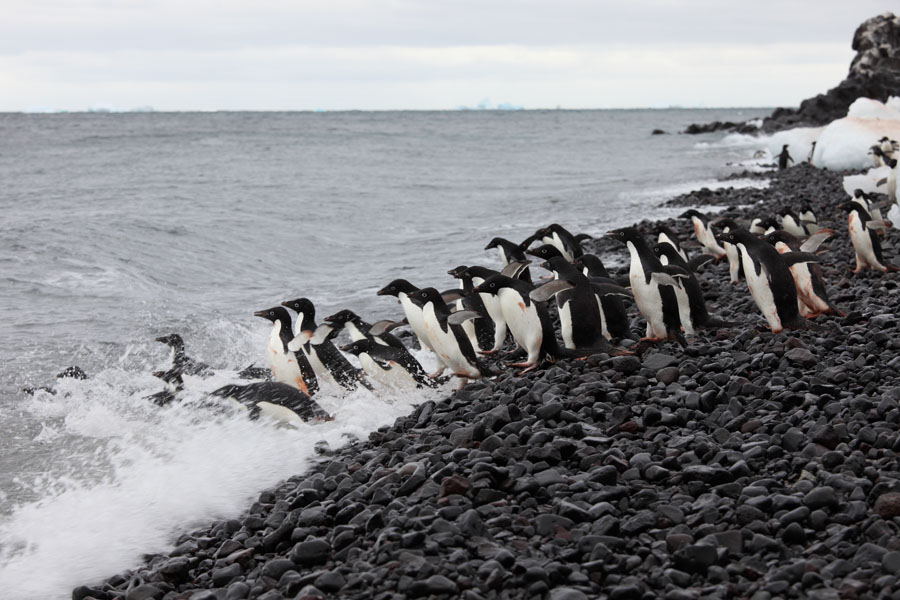
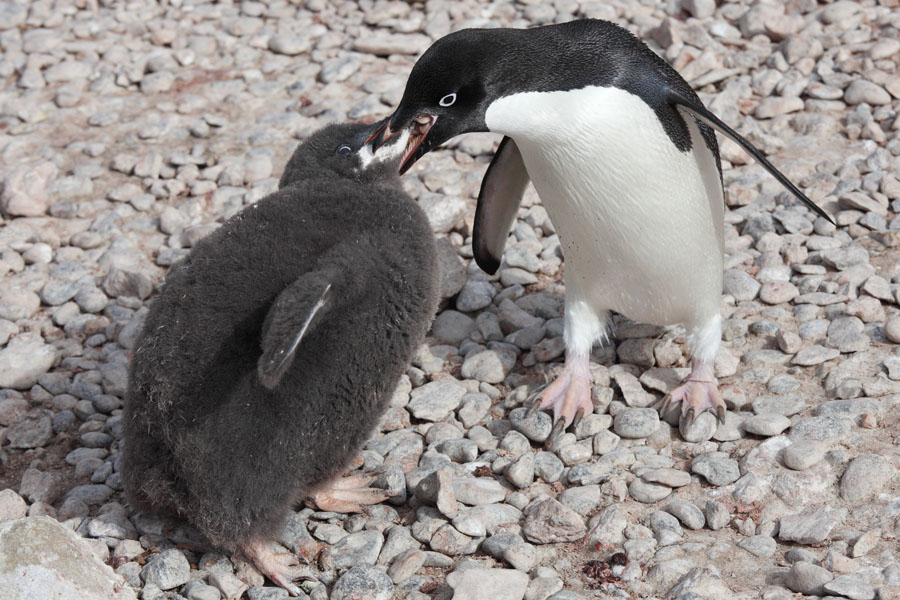
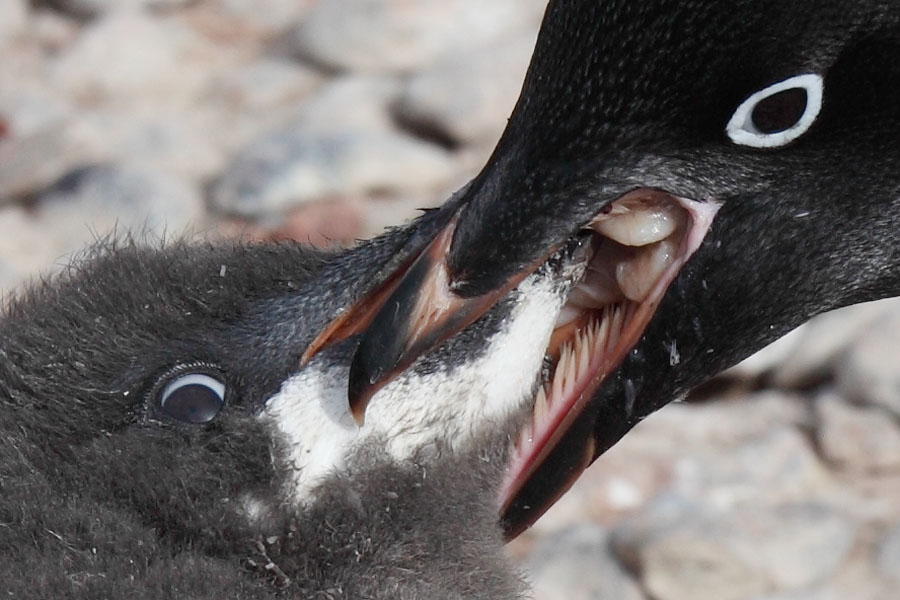
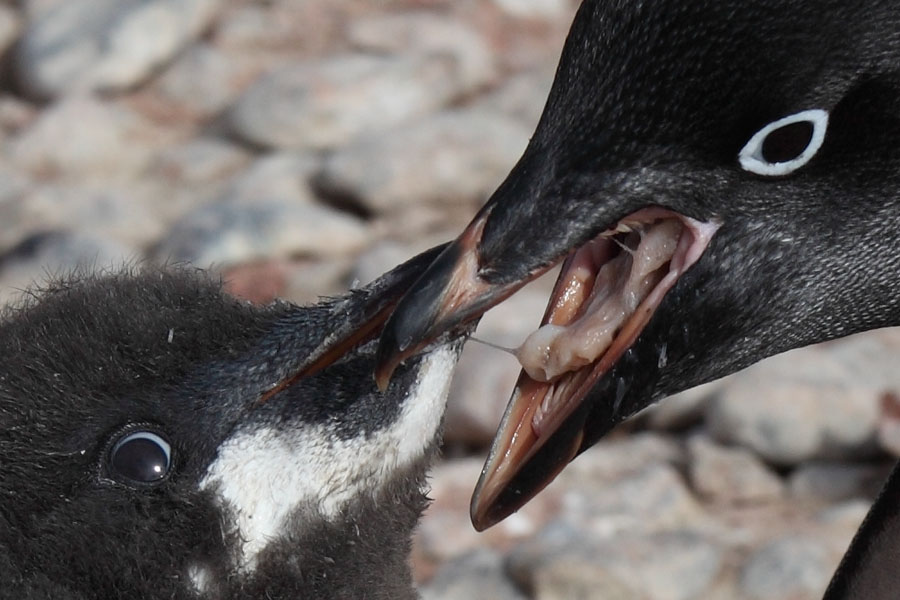
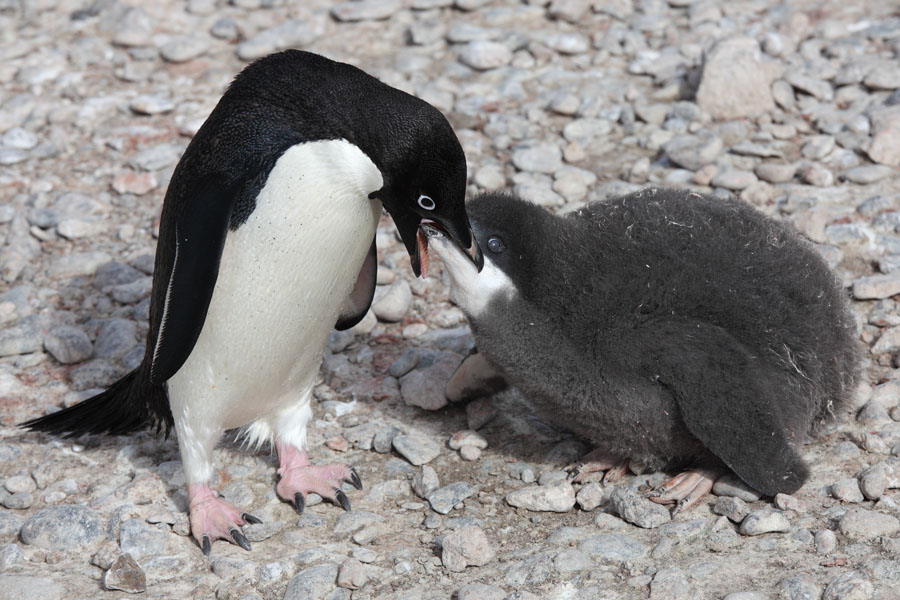
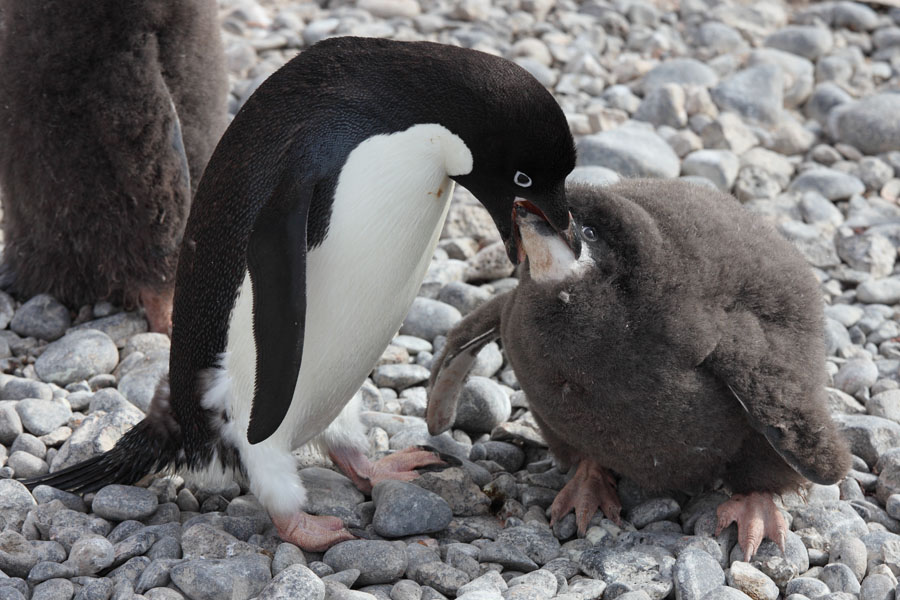
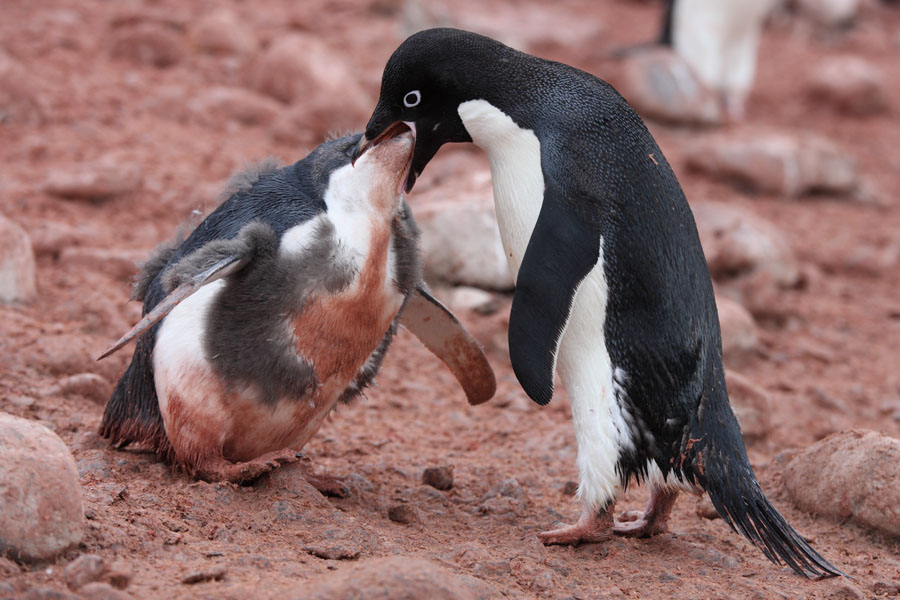
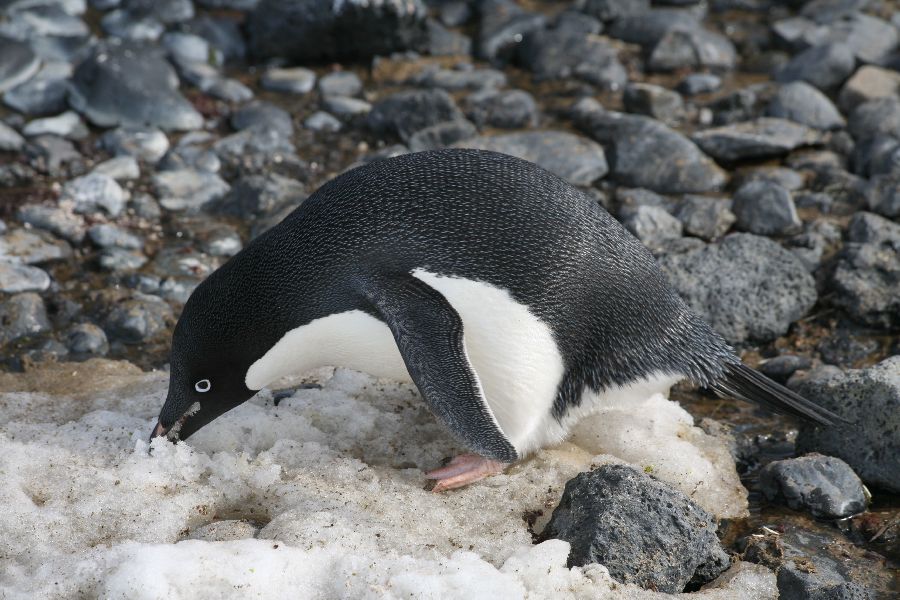
Adelie penguins feed on a variety of organisms such as small fish (e.g. anchovies), cephalopods (e.g. squids) and crustaceans (e.g. krill). The diet at any particular location and time reflects fluctuations in food availability. Krill (antarctic or crystal) seems to be the preferred food source when available. Fish are the most abundant prey during the breeding season, whereas squid predominates in the winter. Hunting is by sight so the dive depth is dependant on the amount of light. Usually dives do not last longer than 5 minutes and are not deeper than 50 m, however dives of 170 m have been recorded. Most of the feeding takes place in areas where there is broken up sea ice around land. Especially at the beginning of the breeding season, large areas of unbroken sea ice may separate Adelies from the water, necessitating long foraging trips. If the sea ice does not retreat fast enough, the Adelies may be unable to feed their chicks sufficiently.
During the breeding period, birds only spend short periods at sea, whilst during feeding in the winter season birds may rarely be on land, although the birds do leave the water to moult on pack ice in Feb./Mar. |
Reproduction: |
||||||||||||||||||||||||||||||||||||||||||||||||||||||||
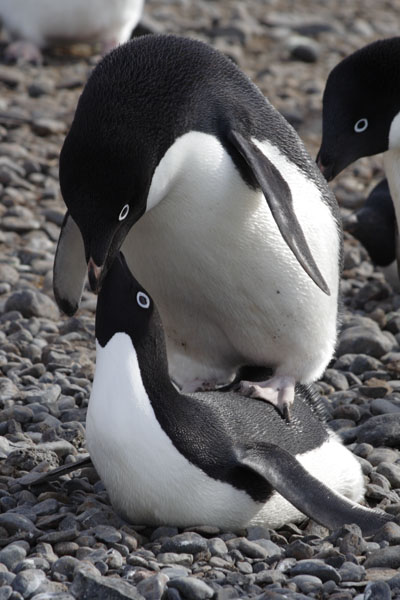
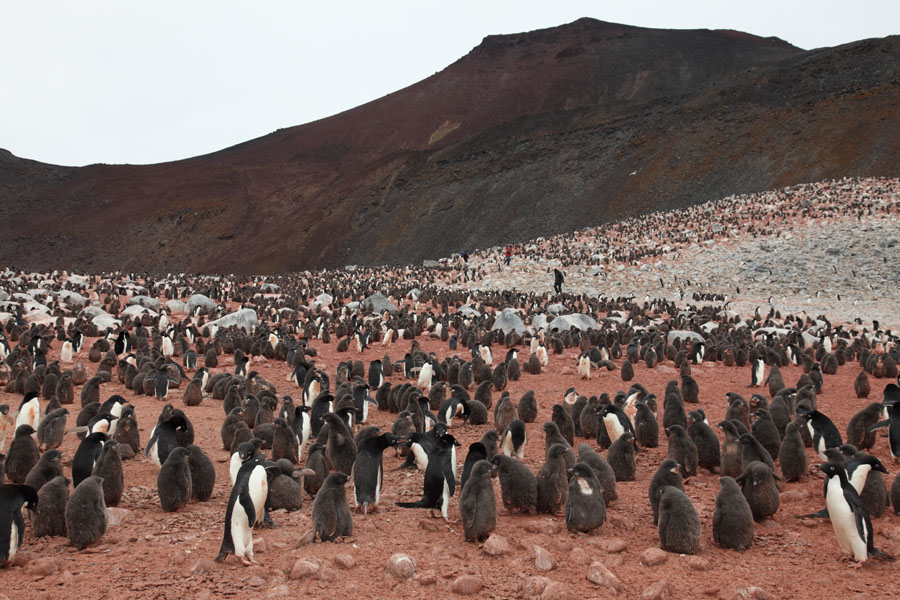
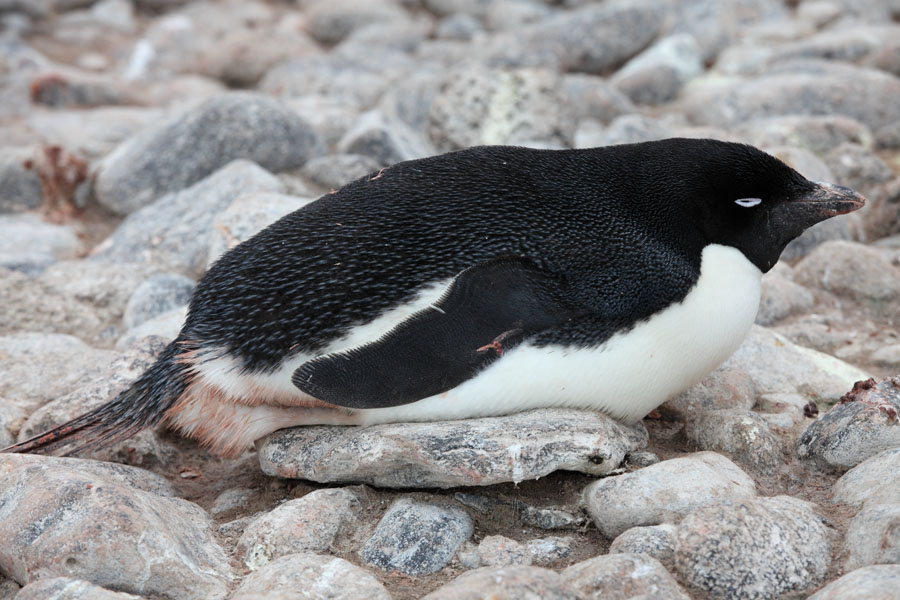
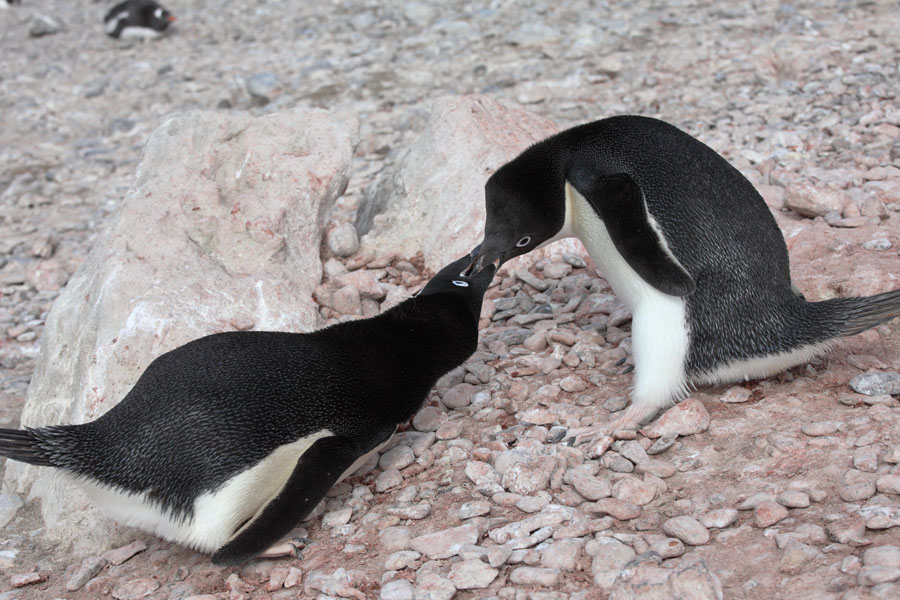
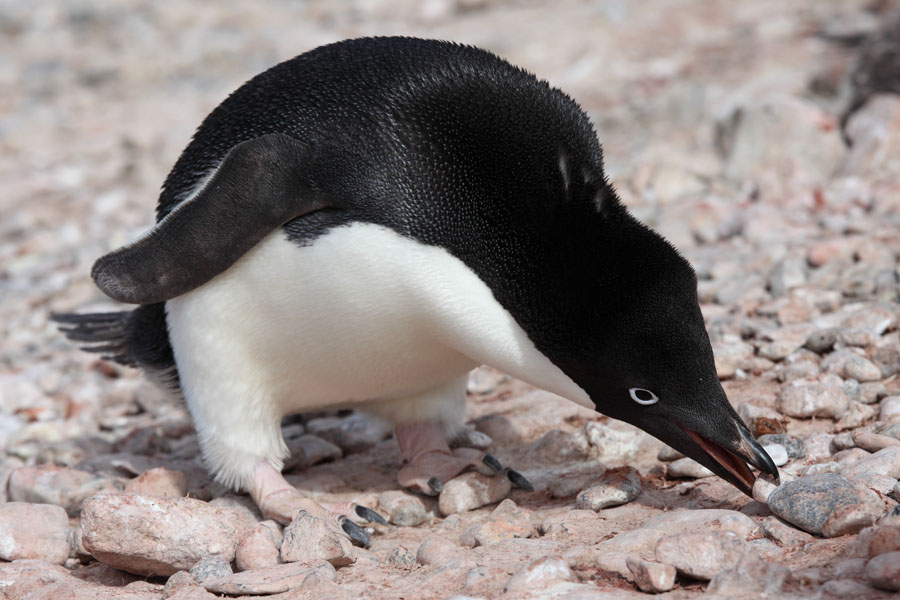
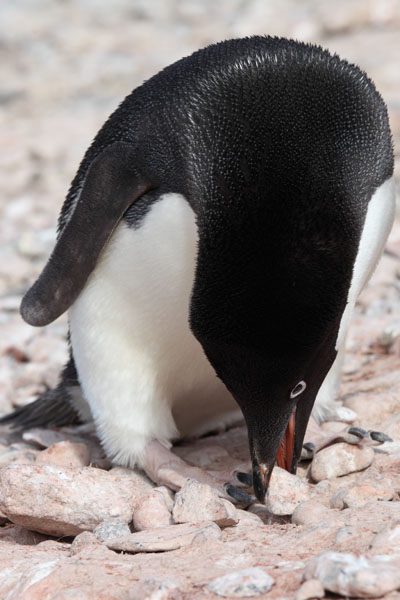
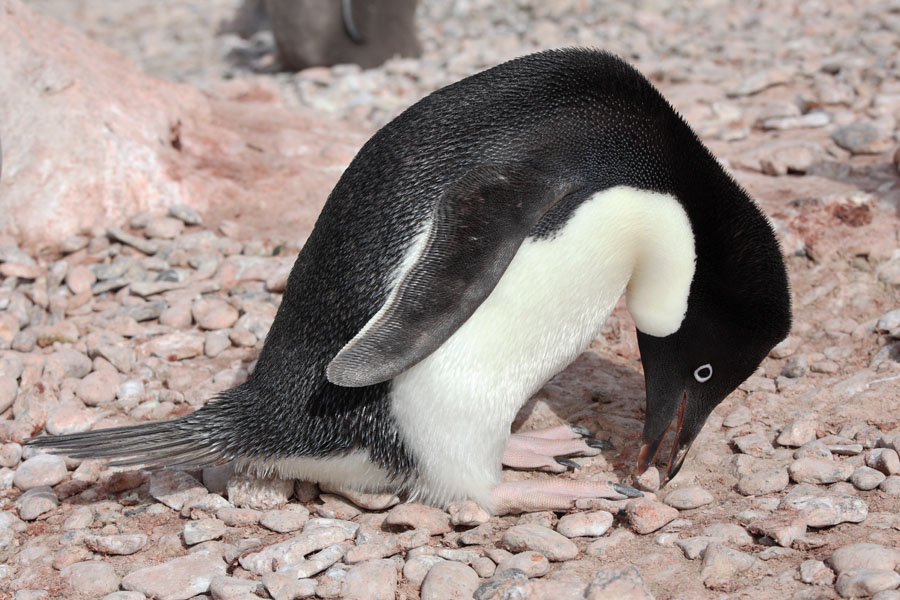
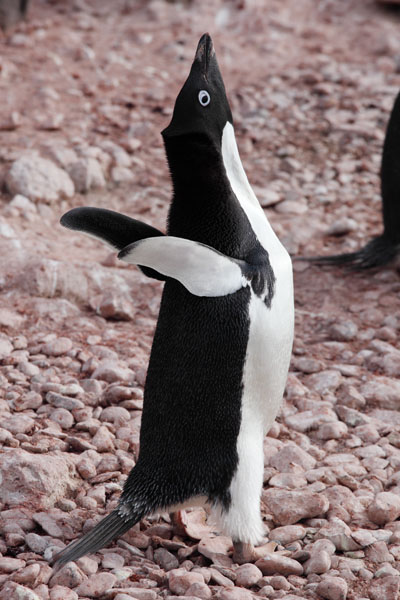
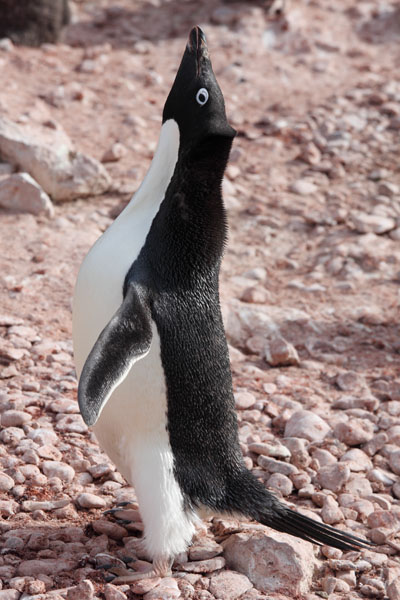
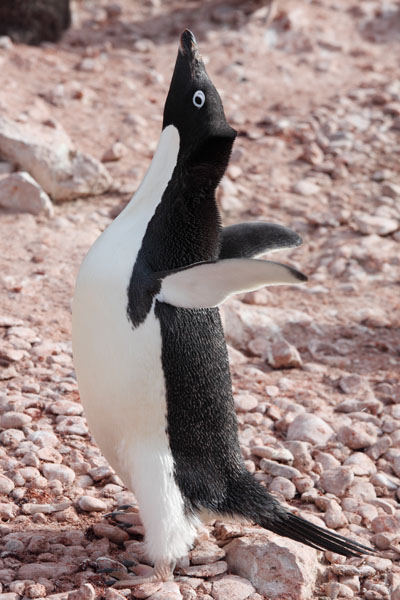
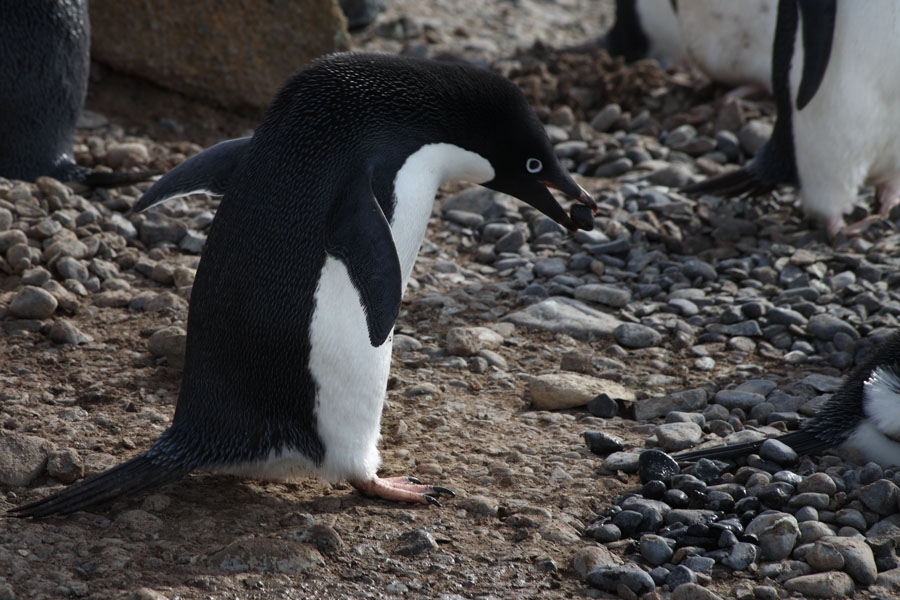
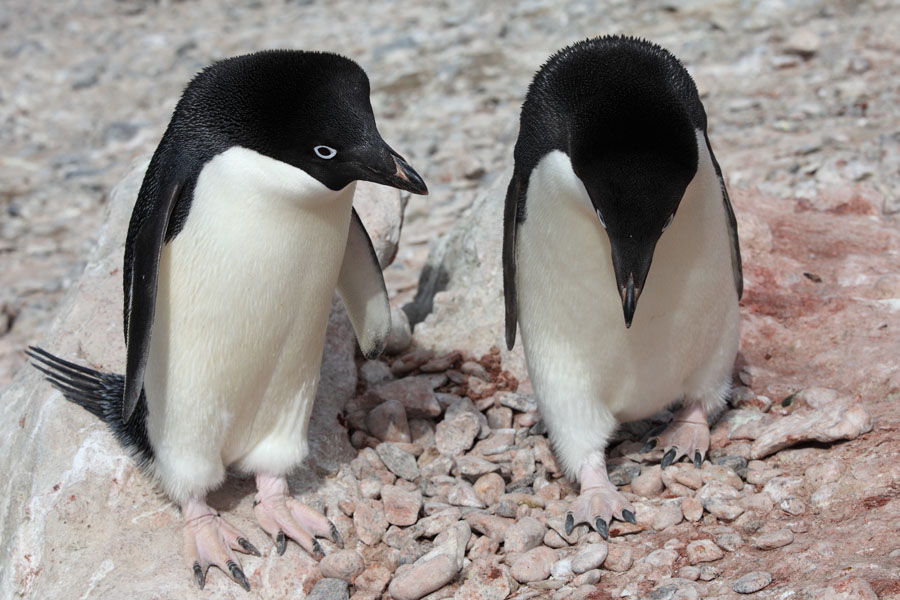
After a period of feeding to gain weight before breeding, Adelies migrate to their colonies around October. Courtship is instigated by the male and usually initially involves the "ecstatic display". The penguin faces skywards with breast thrust outwards and flippers flapping horizontally whilst it makes a series of short calls. This is repeated many times until a female penguin becomes interested. Following this, the male may perform the "Bill-to-Axilla display" where it essentially alternatively looks into each of its "armpits". Birds may also proceed to bow to each other. Once a pair bond has been established, birds may stand breast to breast with heads raised and beaks open but flippers against the body, and may accompany this by calling and swaying of bodies from side to side ("mutual display").Adelies are not particularly faithful to previous partners. Females will readily choose a new mate although if they find their previous one they may try and drive any competitors away and mate with it. This is possibly a result of the intense pressure to make use of the short summer breeding time-frame, and also the result of the high mortality rate of adult Adelie penguins. The nest is made of little pebbles lined with e.g. feathers. Colonies are often extensive with each nest being located just out of pecking distance of the surrounding ones. Adelies often try to steal rocks from other nests.Copulation is started when the male approaches the female from the side, often repeatedly bowing, and climbs onto the middle of her body. The bills then meet and gently beat against each other as the male moves backwards and the female raises her tail to allow the cloacas to meet. The process is repeated numerous times.
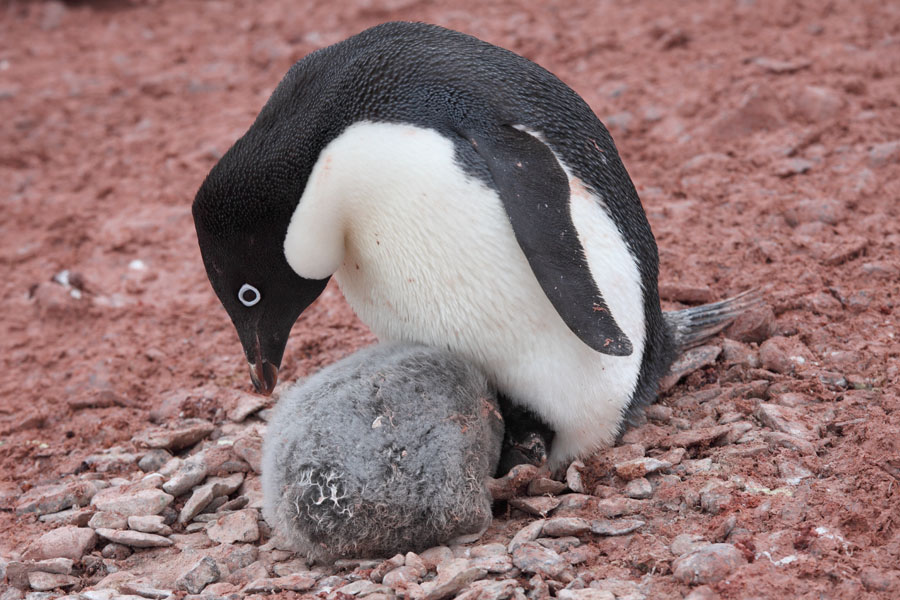
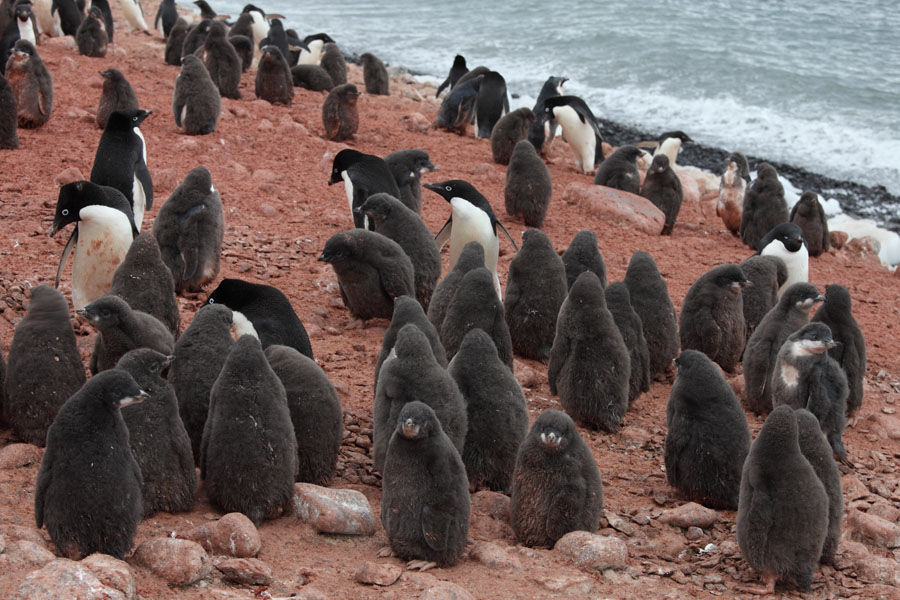
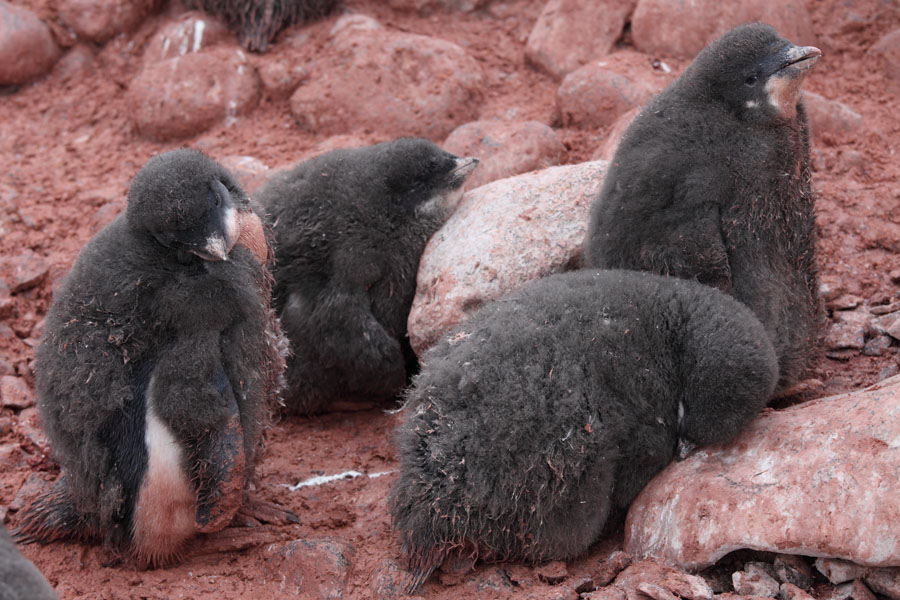
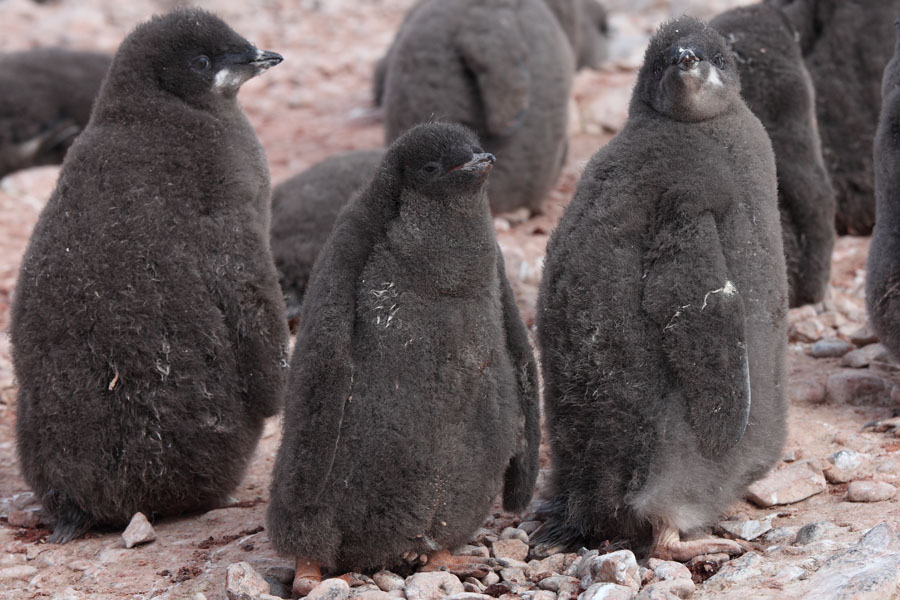
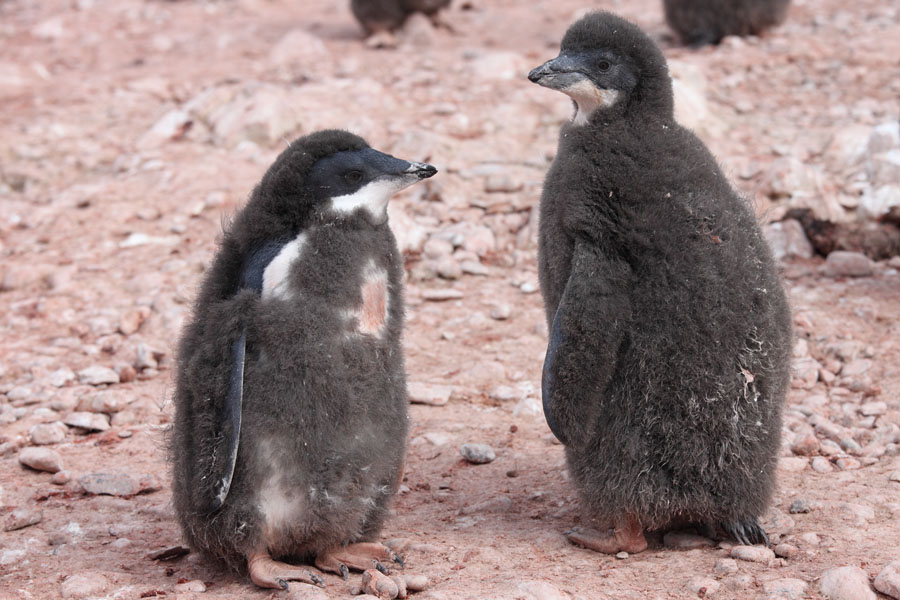
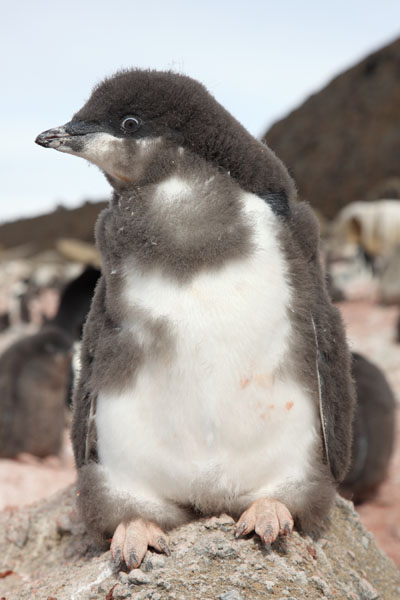
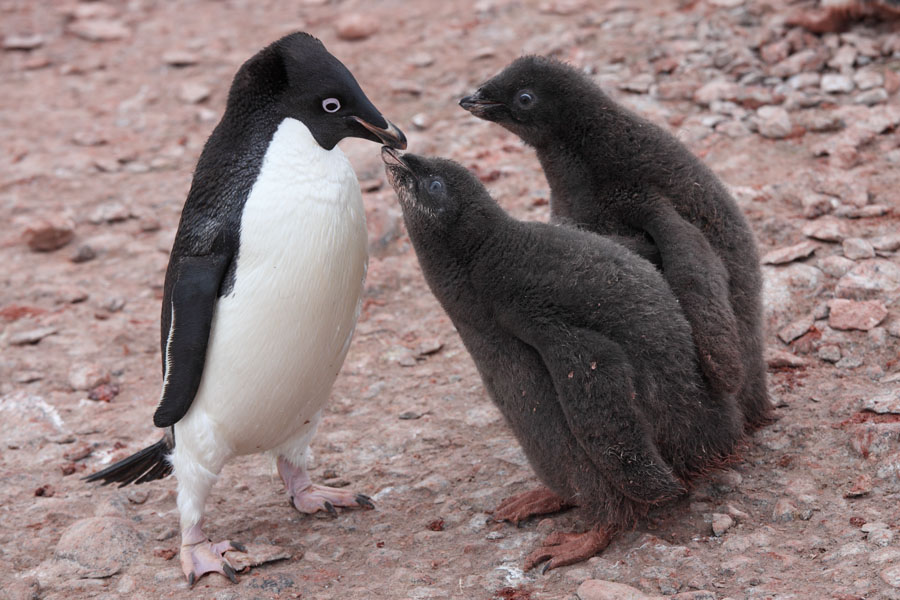
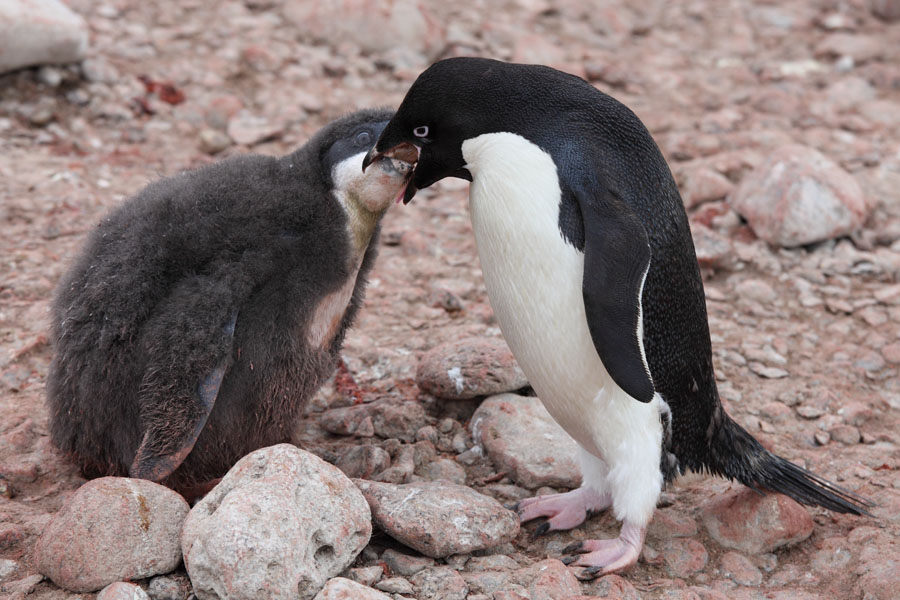
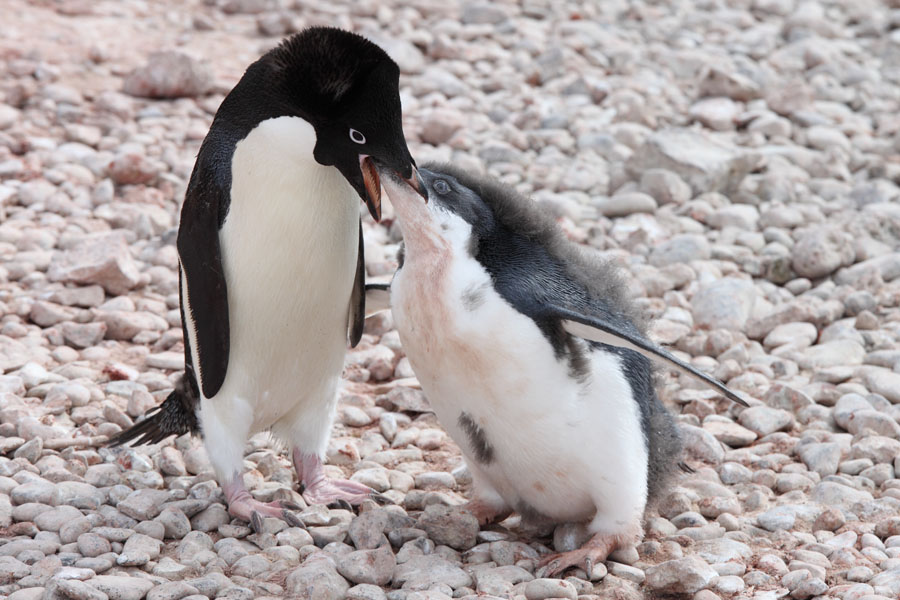
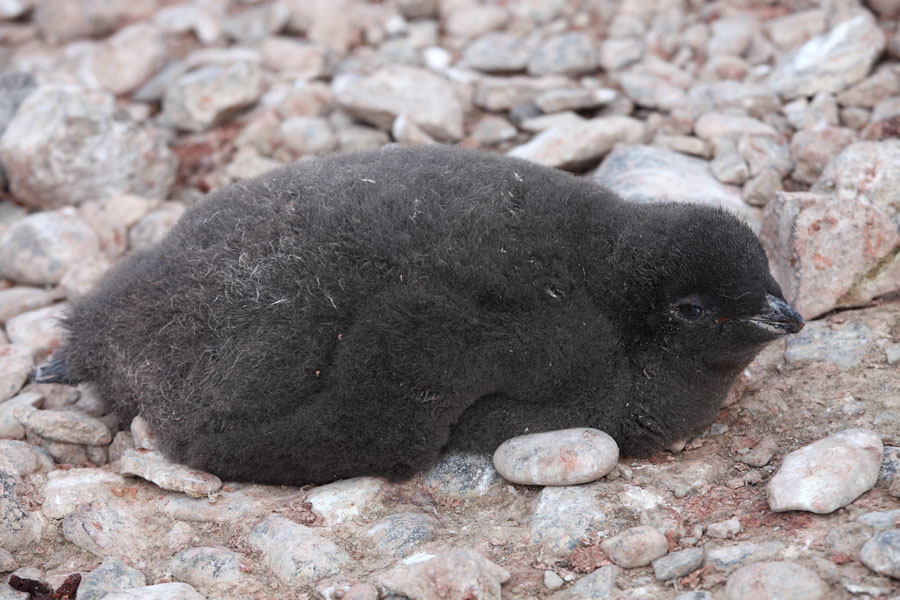
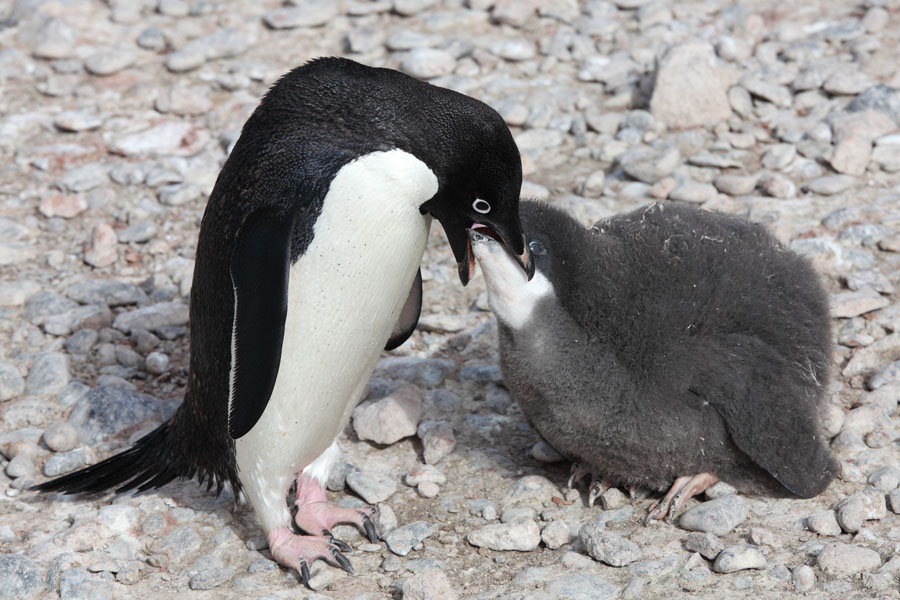
One or two eggs weighing 100-125 grams are laid in Nov./Dec. and incubated alternatively by both parents, but first by the heavier male, for only about 35 days. Eggs may be lain on or may be held on the feet. This short incubation period is probably an adaptation to the short antarctic summer. After hatching, chicks initially remain on the nest but after 3 weeks they start to form small creches. At 7-8 weeks, the chicks leave the colony and head out to sea. Sexual maturity is reached in 3 years by females and 4 by males, yet breeding usually is started 1-2 years later.
|
General Behaviour: |
||||||||||||||||||||||||||||||||
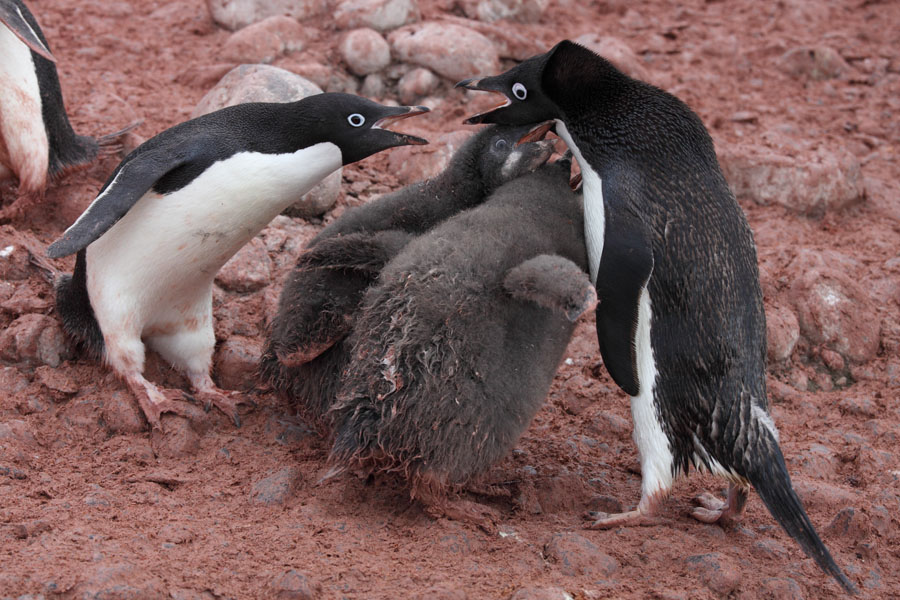
Adelie penguins are less timid than other Pygoscelid species and may not retreat when approached by humans. Further, Adelie penguins may attack the nests of Skuas, breaking eggs or even killing chicks. Three different threat postures are adopted by Adelie penguins; (i) penguin stands upright with flippers against body, eyes looking down, crest erected, and usually additionally points body towards the threat with its bill pointing directly at it ("direct stare posture"), (ii) the penguin stares with one eye at the threat with its neck arched to one side ("fixed one eye stare"), and (iii) the penguin alternates between one eyed stares with left and right eyes and slowly waves its flippers as it does this ("alternate stare"). Each of these postures may be accompanied by calls. Birds may also crouch forwards with their bellies close to the ground, whilst pecking or calling. In order to avoid fights, penguins may assume a defensive pose (for example when walking between nests) which involves holding feathers and flippers tightly against body and elongating the neck, all of which make the body seem smaller.
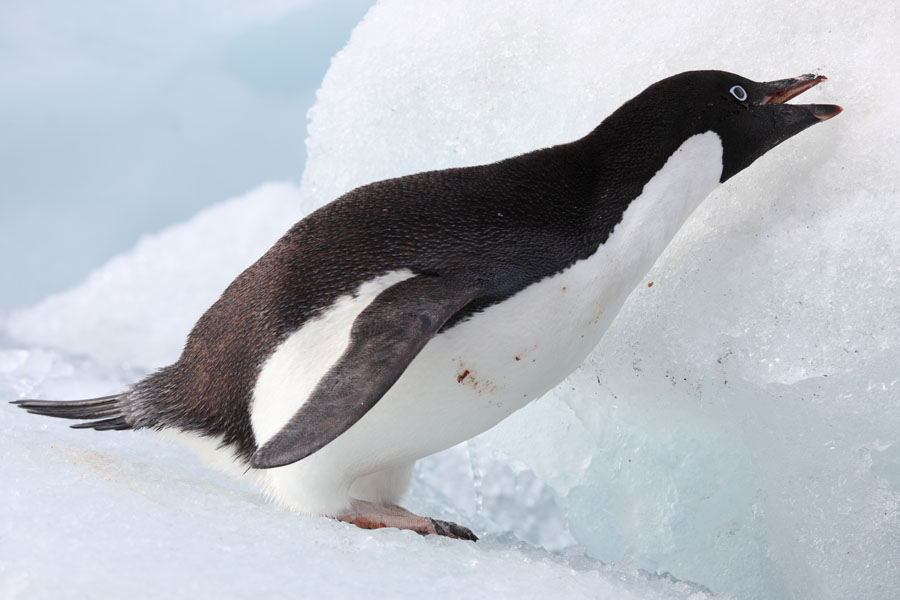
When Adelie penguins fight, they tend to come breast to breast and bump each other whilst hitting with their flippers and grabbing and pecking each other with their bills. Penguins may charge at each other or at skuas with upright bodies and crests and flippers extended.Similar to Emperor penguins, Adelies sometimes have to cross large areas of sea ice. It may be necessary to cross 100 km of sea ice to reach their colonies at the start of the breeding season. Unlike the Emperor, Adelie penguins can not actually nest on ice. Adelies also make use of the tobogganing technique used by the Emperor. |
Threats: |
||||||||||||||
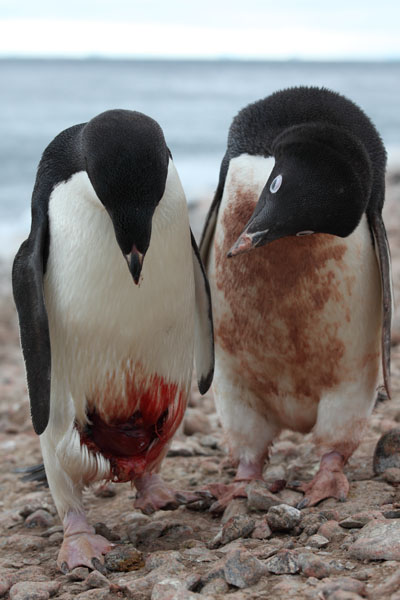
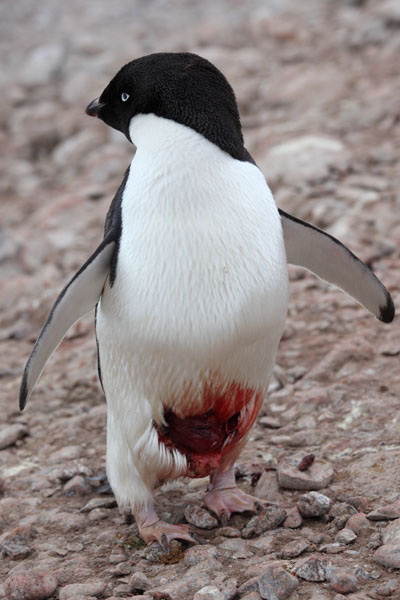
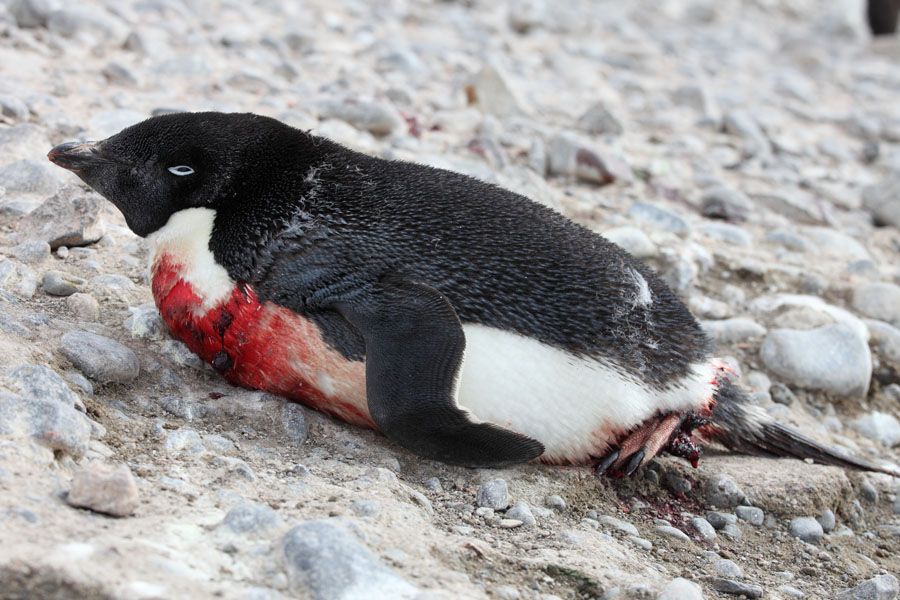
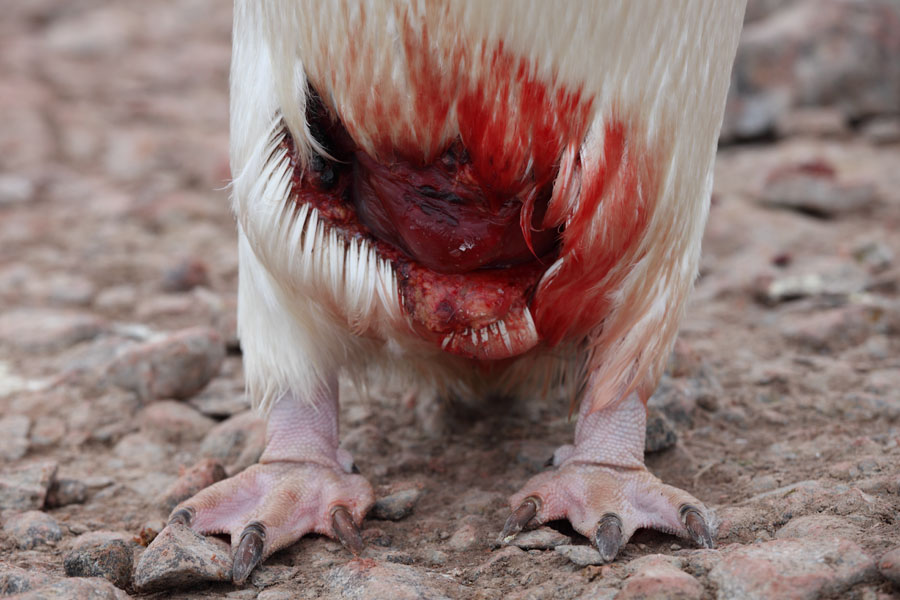
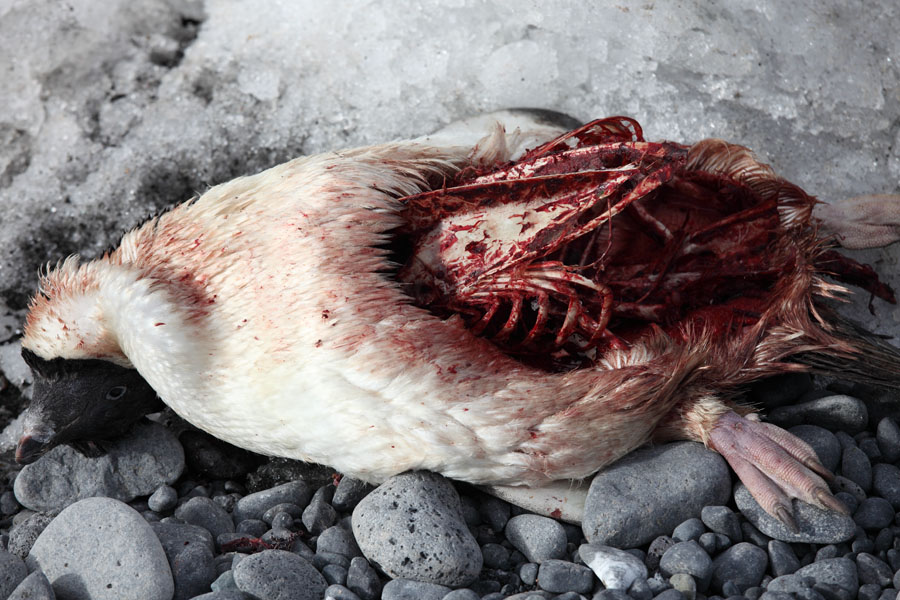
Natural predators of adult Adelie penguins are leopard seals and killer whales. Penguins that have been injured but escaped attacks by these predators are often seen at colonies but only survive if the injury is relatively minor. Chicks and eggs may fall victim to Skuas and Giant Petrels.
Adelie penguins are highly adapted to regions with extensive sea ice coverage around the antarctic continent. Further, their principle prey species, Antarctic Krill, requires sea ice in order to breed successfully. Consequently there is increasing concern that Adelie Penguins may be adversely affected by global warming which has significantly increased temperatures in the Antarctic Peninsula region in the last decades. Studies on the South Shetland Islands have revealed that declining numbers of Adelie Penguins since the mid 1970s are correlated to reduced krill availability. Whilst breeding success is only directly affected in years of extreme shortages, recruitment of young birds into the breeding populations has fallen, presumably due to the inability of many juvenile birds to find sufficient food after fledging (Hinke et al. 2007. Oecologia 153, p.845-855). Increased commercial fisheries activity near their breeding grounds is likely to exacerbate the situation.Further, it appears that where Adelie populations cohabit areas with Chinstrap Penguins, conditions are becoming increasingly favourable (relatively) for the latter. Adelies only appear to outbreed Chinstraps when sea ice cover is extensive in the vicinity of colonies at the beginning of the breeding season. This has been rarely the case in recent years. Further, Chinstrap Penguins appear to be able to competitively exclude Adelie Penguins from feeding areas, forcing the latter to feed further from their colonies. This is thought to have had a significant impact on Adelie breeding success in 2000 on Signy Island when food availability was generally low (Lynnes et al. 2002. Mar. Biol. 141, p.1165-1174). Years of low food availability are becoming more frequent. Further, Adelies may suffer direct aggression from Chinstrap Penguins on land, where examples of eviction of breeding Adelies from nests has been observed.Human disturbance is also known to affect the breeding success in Adelie colonies, although this is a minor issue. |
Where To See: |
||||||||
Large numbers of Adelie penguins are found near Ross island and in McMurdo sound. However, only few ships visit the area with tourists and prices are prohibitive. Adelie penguins also inhabit the Antarctic Peninsula and some of the nearby islands. In the antarctic summer, these areas are frequented nearly daily by cruise ships of various sizes, most of which depart from Ushuaia in Argentina. Popular landing sites are Brown Bluff on the Antarctic Peninsula and nearby Paulet Island.
|
 |
 |
 |
 |
 |
 |
 |
 |
 |
 |